How does the Commonwealth respond to human rights concerns?
The Commonwealth funds human rights work, observes elections, and can suspend its members. Challenges include democracy and LGBT+ rights.

The UK is one of the largest donors to UN agencies. How much does it provide and what reforms does the UK want to see?
2025 marks the 80th anniversary of the signing of the UN Charter. The UK was one of the UN’s founding members, is one of the five permanent members of the Security Council, and is a leading aid donor.
The anniversary comes at a time of increased pressure on the multilateral system and on aid agencies themselves, as a result of planned reductions in the aid budgets of many donor states, including that of the UK. Several UN agencies have warned of in-year reductions.
As part of the UN at 80 initiative the UN Secretary General has also proposed reforms to UN agencies to reduce fragmentation and duplication in their efforts.
This page sets out UK funding to the UN and its agencies, the state of funding to UN agencies, and UK statements on reform and funding.
As set out in the Commons Library’s UN at 80: funding challenges at the UN, UN organisation financing is separate from the funding of UN agencies. However, funding for both comes from three main sources:
In 2024, 25% of all the UN and UN agency budget was from assessed contributions, 67% from voluntary contributions, and 9% from additional revenue.
Between 2013 and 2024, the UK provided an average of about £630 million per year in contributions to the UN’s main institutional budget and its Department of Peace Operations (UN-DPO). This breaks down by year as shown in the chart below.

Source: UN System Chief Executives Board for Coordination, Revenue by Government donor, retrieved 27 October 2025. Converted to GBP using average exchange rates from ONS, Time series AUSS.
This shows that the UK’s contributions to the UN’s main budgets peaked in 2019 before falling sharply in 2021, but have since increased again. Almost all of the variation in contributions to these budgets comes from voluntary contributions.
The UK consistently provides more funding to individual UN agencies than it does to the UN’s main budgets. The main agencies that it supported in 2024 are the World Food Programme (WFP), the UN Children’s Fund (Unicef), the World Health Organisation (WHO), the International Organization for Migration (IOM), and the UN Population Fund (UNFPA). As the chart shows, between them these agencies accounted for over half of all funding to UN agencies in every year between 2013 and 2024.

Source: UN System Chief Executives Board for Coordination, Revenue by Government donor, retrieved 27 October 2025. Converted to GBP using average exchange rates from ONS, time series AUSS.
The pattern of funding to UN agencies over time is very similar to that for the main UN budgets. This may reflect the fact that most funding to UN agencies comes from voluntary contributions, and can therefore change easily from year to year. In 2024, 92% of all UK funding to UN agencies was voluntary.
Most of the UK’s voluntary contributions to agencies are earmarked for specific projects. Of the roughly £1,600 million that the UK provided in voluntary contributions to UN agencies in 2024, about three quarters (74%) was earmarked.
UN data shows that the United States, Germany, the UK, Japan and China have been the top five donors to the UN and its agencies in recent years (across both voluntary and assessed contributions). Since China first became a top five donor in 2017, Canada, Sweden, or Norway have sometimes pushed it out of the top five.
In 2024, of the five permanent members of the Security Council, the US contributed the most (31% of all funding), followed by the UK (6.6%), China (5.3%), France (3.2%) and Russia (0.7%).
In 2025, the Trump administration announced a review of all US aid to international organisations (the outcome of which not been published), it plans to end funding to the WHO, not to restore funding to the UN Relief Agency for Palestine Refugees (UNRWA) and stop all commitments to the UN Population Fund (UNFPA).
The administration’s 2026 budget proposal does not currently include funding for UN peacekeeping, the UN’s regular budget, and many UN agencies.
The UN Secretary General and individual UN agencies have warned of budget cuts and reductions in services in 2025 due to delays in paying assessed contributions (notably the United States and China) and wider cuts in global aid budgets.
The Organisation for Economic Cooperation and Development (OECD) projects that total global aid fell by 9% in 2024, and will fall by between 9% and 17% in 2025. UN agencies have warned this will affect areas such as aid for women and girls, including ending violence against women and girls, global health, and education.
Countries that have announced reductions in their aid budgets include the UK, France, Germany, and the United States. The EU is also reportedly considering whether to end funding to some agencies that have overlapping mandates.
Around 50% of all global aid is sent via multilateral agencies (PDF), including those of the UN. Several UN agencies have issued statements warning of reduced budgets or lower than expected aid pledges in 2025:
While alternative sources of finance, such as China, Arab Gulf states, private sources, and development banks and finance institutions exist, their priorities and channel of aid delivery often differ from those used by established government donors, in being influenced by different foreign and security priorities, focused on loans or private sector activity (PDF), and having different areas of expertise or priority areas.
Some African leaders have argued reductions in aid offer opportunities for more local-led financing and eliminating waste in aid spending.
Multilateral agencies are also looking to other non-aid sources. Debates are ongoing on mobilising new sources of finance, including from the private sector, and action on greater debt relief. See the Commons Library Insight: Financing for development: Global aid landscape 2025, July 2025.
Under the “UN80” programme, the UN Secretary General, António Guterres, has proposed changes to how the UN functions to reduce “siloes”, “fragmentation” and “duplication” in UN agencies and in-country presence.
His 2025 report said that an average of 20 distinct UN agencies now operate in each country. This is part of the wider increase in the number of aid agencies active in aid-recipient states: in 2022 the World Bank estimated that 92 (two-thirds) of aid-recipient countries had at least 80 donor agencies, up from 22 countries in 2009. Analysis by the Center for Global Development also estimates that aid programmes have got smaller in value, with a “median commitment size of around $100,000” (PDF), fragmenting the aid landscape.
The Secretary General’s initial proposals in September 2025 suggest the streamlining or merging of several UN agencies:
The Secretary General said his office was willing to consider further mergers, as suggested by member states.
In April 2025 the Foreign, Commonwealth and Development Office (FCDO) Minister, Stephen Doughty, said that the UN “needs major reform” to address future challenges. The government has backed the UN80 reform initiative and called on the UN to focus on “core priorities and tangible results”.
As part of the process of reducing UK aid to 0.3% of gross national income, the government has said it “will prioritise spending our [aid] budget through multilaterals” (PDF) as this offers “legitimacy and scale”. It has set out four priority themes: humanitarian aid, health, climate, and international financial institutions.
As part of the reductions, International Development Minister Baroness Chapman has said “underperforming multilateral organisations will face funding cuts in the future”. The Minister has not set these out.
The government’s most recent review of UK funding for multilateral organisations was conducted in 2016. The UN Educational, Scientific and Cultural Organisation (UNESCO) was the lowest-ranked UN-linked body and the review judged that “several UN development agencies” had a “mixed” performance. The government said at the time that it would “work even more closely” with the agencies to ensure reforms were carried out. The International Development Committee has suggested a new review of multilateral funding be launched.
The government has also said coordination between aid agencies needs to be improved and their work streamlined, and more focus given to ensuring they deliver for clients.
The FCDO says any voluntary contributions to UN agencies are assessed on a case-by-case basis and that it “rigorously scrutinises” UN budgets to ensure they are in line with UK priorities and interests.
Indicative multi-year spending plans are expected to be released by the government in Autumn 2025.
The Commonwealth funds human rights work, observes elections, and can suspend its members. Challenges include democracy and LGBT+ rights.
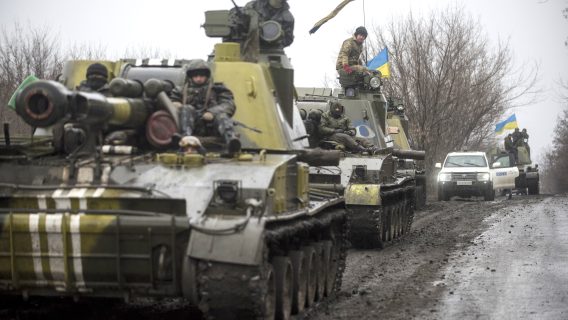
This paper provides a timeline of the major events in the Ukraine-Russia conflict since the 2022 Russian invasion.
The five Nordic countries – Denmark, Finland, Iceland, Norway and Sweden – work closely together through the Nordic Council and Nordic Council of Ministers