Constituency data: house prices
Find constituency data on house prices over time.
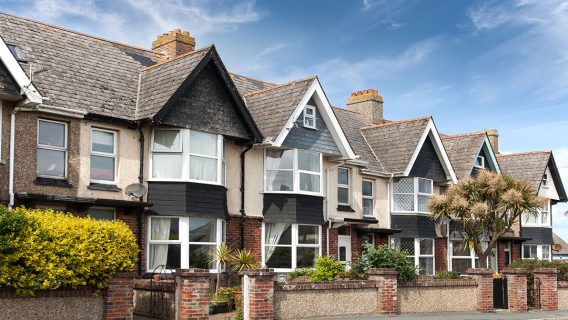
We look at the issues surrounding leaseholds and where they are most likely to take place.
In June, a Government announcement confirmed plans to ban the sale of new-build houses on a leasehold basis in England. Labour followed suit in its ‘new deal for leaseholders’ (PDF 332 KB) report published in July.
Who will be affected by these changes? The practice of selling houses as leasehold is rare in most of the country, but more common in parts of the North of England. In this Insight we look at the issues surrounding leaseholds and where they are most likely to take place.
If you own
a residential property in England and Wales, you will usually own it on either a
freehold or a leasehold basis. Freeholders own both the property and the land
it is built on, while leaseholders do not own the land. Leaseholders are
effectively in a landlord and tenant relationship with a freeholder – they own
the right to live in a property for a number of years, rather than the property
itself.
Leasehold ownership can come with problems such as high service charges and ground rents owed to the freeholder, as well as substantial costs associated with extending the lease or buying the freehold.
Leasehold is a very common tenure for flats, because it allows flat owners to own a unit within a building while the building is owned and maintained by someone else. However, some houses are also sold on a leasehold basis. This practice has been described as ‘inappropriate’ by the Housing, Communities and Local Government Select Committee.
The Government committed to reforming some of the issues with leasehold in its February 2017 Housing White Paper, and launched a consultation in July of that year. It first announced its intention to ban the practice of selling new-build houses as leasehold in December 2017, and in June 2019 confirmed it would bring forward legislation ‘as soon as parliamentary time allows’ to prohibit the creation of new leases on new-build or existing houses. Houses that are already owned as leasehold can continue to be sold on this basis under the Government’s plans.
Using data
from the Land Registry, we can look at how leasehold sales vary geographically
and over time in England and Wales.
The map below shows the percentage of houses (not flats) that were sold on a leasehold basis in each constituency between the start of 2014 and the end of 2018. While leasehold houses are uncommon in most of the country, the majority of house sales were leasehold in parts of Greater Manchester and Sheffield. Sales are noticeably higher in the surrounding area, too.

If you’re interested in getting figures for your constituency, they’re available as part of our Leasehold and commonhold reform briefing paper. There’s an Excel file for download (108 KB) that has percentages for each constituency in England and Wales.
The Land
Registry data has a record for each individual property sold. That means we can
look at trends within the ‘Northern hotspot’ shown above in fine geographical
detail, which is what we’ve done in the map below.
It shows the outline of the ‘hotspot’
constituencies in red. It also does two things to make the trends in leasehold
sales clearer:
This helps us see more precisely where leasehold house sales have been happening. They were particularly common in Salford and central Manchester, nearby towns to the north (such as Oldham), Blackburn, Huddersfield, and Sheffield. By contrast, rates were lower in Liverpool, Blackpool and Preston. Areas outside of the ‘hotspot’, such as Leeds and the Wirral, also had lower rates.

Leasehold sales have been more common in this group of constituencies than in the rest of England since at least 1995 (the earliest year for which the Land Registry publishes data). The chart below shows the proportion of new-build and resale homes sold on a leasehold basis in the area up to 2019.

The
proportion of new-build homes sold as leasehold increased from about a third of
homes in the nineties to a peak of 74% in the first quarter of 2017, before
dropping off dramatically. Only 8% of new-build homes were sold as leasehold in
the second quarter of 2019.
This drop was
almost certainly caused by the shift in Government policy on leasehold
new-builds.
But what
about houses that aren’t new-build? A little over a third of house resales have
been leasehold in the ‘Northern hotspot’ between 1995 and 2019. When new-build
houses stop being sold as leasehold entirely, there will still be a substantial
stock of houses that are already subject to leasehold arrangements in the area.
It’s therefore likely that there will continue to be a relatively high
proportion of house resales on a leasehold basis.
Buyers may
find that the type of house they buy affects their chances of owning a
leasehold home. The chart below shows trends in the proportion of terraced,
semi-detached and detached houses sold as leasehold in the north.
Leasehold has historically been more common for terraced houses than other types. Detached houses have followed a similar pattern to new-build homes, peaking in 2016-17 before declining. This is perhaps because detached houses are more likely to be new-builds: since 1995, 20% of detached houses sold in the area have been new-build compared with 4% of terraces.

While
leasehold house sales do happen across England, the Government’s plan to ban leasehold
for new build houses will most likely benefit buyers in certain parts of the
country, including Greater Manchester, Sheffield and Lancashire. Even within
those areas, some neighbourhoods (or MSOAs) are much more likely to have
leasehold housing for sale than others.
New-build
house sales have already dropped considerably ahead of the planned legislation.
However, there is an existing stock of leasehold housing – much of it terraced
– which will probably continue to be resold as leasehold in future.
About the author: Cassie Barton is a Senior Library Clerk at the House of Commons Library, specialising in housing and planning.
Find constituency data on house prices over time.
This briefing explores statistics on leasehold housing stock and transactions, in the context of ongoing reforms to the leasehold system.
This Commons Library briefing paper provides information about the freehold covenants. Specifically, detecting, enforcing, modifying or releasing a covenant.
