How much aid does the UK spend in Pakistan, and why?
What is the value of UK aid to Pakistan, on what priorities does it focus, and how effective has it been?
The United Kingdom has long been an active contributor to UN peacekeeping missions – operations led by the United Nation’s Department of Peacekeeping Operations (DPKO). The UK is the fifth-highest provider of assessed contributions to the UN peacekeeping budget (2013-15), behind the US, Japan, France and Germany. There have been 68 UN peacekeeping missions since 1948;
The United Kingdom has long been an active contributor to UN peacekeeping missions – operations led by the United Nation’s Department of Peacekeeping Operations (DPKO). The UK is the fifth-highest provider of assessed contributions to the UN peacekeeping budget (2013-15), behind the US, Japan, France and Germany.
There have been 68 UN peacekeeping missions since 1948; the vast majority (55) since 1988. There are 15 current peacekeeping operations, or 16 if the political UN Assistance Mission in Afghanistan is included. Full details of current missions are available on the DPKO’s website, including details of date started, personnel and budget.
In the 2010 Strategic Defence and Security Review the Government laid out six priority goals for the next five years. One was to:
work with the UN Secretariat, regional organisations and key member states, including the emerging powers and troop and police contributing countries (both current and potential), to ensure that conflict prevention plays a central role in UN efforts to foster global peace and security, alongside more effective peacekeeping and peace-building.
Two related Government strategies are:
10.3 UN Peacekeeping missions and operations authorised by the UNSC and led by regional organisations contain violence, stabilise fragile post-conflict situations and reduce the likelihood of hostilities resuming, without the need for direct UK military intervention. Though relatively low cost compared to coalition missions, international peacekeeping is still an expensive undertaking. We will to continue to lead efforts to improve the efficiency and effectiveness of UN peacekeeping, and ensure that such interventions support the political processes which will deliver long-term stability. We will also work to ensure peacekeeping missions stay no longer than necessary.
10.4 Throughout the UN, we will encourage a more joined-up approach to peacebuilding and state building. All the parts of the UN system need to work better together on this agenda. And we will support efforts to strengthen the UN’s contribution to conflict prevention. We will continue to engage with and support UN Departments, Funds and Programmes to improve their combined effectiveness and to ensure the international system delivers tangible results in fragile and conflict-affected states. This includes working to ensure that the UN Peacebuilding architecture and the UN’s political, humanitarian, security and development tools are brought together more effectively.
British personnel are currently supporting three UN peace-keeping missions:
Personnel are also deployed with the EU mission in Bosnia Herzegovina (EUFOR ALTHEA).
The UK contribution to the Cyprus mission has an annual Ministry of Defence (MOD) budget of £17.75 million. MOD costs are estimated to be £310,000 per year for UK personnel deployed in the Democratic Republic of Congo and £45,000 per year for personnel in South Sudan (not including the cost of personnel allowances).
UNFICYP was originally set up by the UN Security Council in 1964 to prevent further fighting between the Greek Cypriot and Turkish Cypriot communities. After the hostilities of 1974, the Council mandated the Force to perform certain additional functions.
British soldiers who serve with the UN Force in Cyprus are completely separate to those who are deployed to the two Sovereign Base Areas in Cyprus. Those with the UN Force serve an unaccompanied six month tour and are responsible for maintaining the integrity of the Buffer Zone that runs between the Greek and Turkish Cypriots. Soldiers wear UN berets. Personnel at the SBA serve a two year accompanied tour.
28 Engineer Regiment are currently deployed with UNFICYP. It is their last operational deployment before being disbanded in June 2014 as part of the Army 2020 restructuring. More information on their deployment and role in Cyprus is available on the Army website.
MONUSCO took over from an earlier UN peacekeeping operation – the United Nations Organization Mission in Democratic Republic of the Congo (MONUC) – on 1 July 2010. It was done in accordance with UN Security Council resolution 1925 of 28 May, to reflect the new phase reached in the country.
Since 2005 the UK has deployed a small number of staff officers in headquarters functions in both UNMISS and its predecessor, the United Nations Mission in Sudan (UNMIS). In 2013/14 the UK contributed £38 million to support UNMISS work.
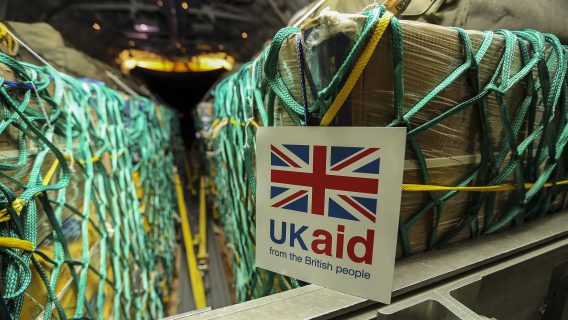
At the end of January 2014 the Government announced it was providing airlift support to UNMISS. An RAF C-17 transported blast wall protection. (For a brief overview of the situation in South Sudan, see the Library’s note South Sudan in turmoil, 6 January 2014.)
Details of all deployments of UK military personnel on the basis of UN resolutions between 2007 and 2012 are available here.
Nigel Walker and Louisa Brooke-Holland
What is the value of UK aid to Pakistan, on what priorities does it focus, and how effective has it been?
What damage did the floods cause, what aid has the UK announced, and what is the future of UK aid to Nepal?
The UK spent 18% of its aid budget supporting refugees in the UK in 2025. This drew criticism from aid groups and committees. What is the government response?
