Heathrow airport expansion proposals
On 18 June 2026 the Department for Transport (DfT) published the draft Heathrow Expansion National Policy Statement (HENPS), which provides a framework for how expansion might be implemented.
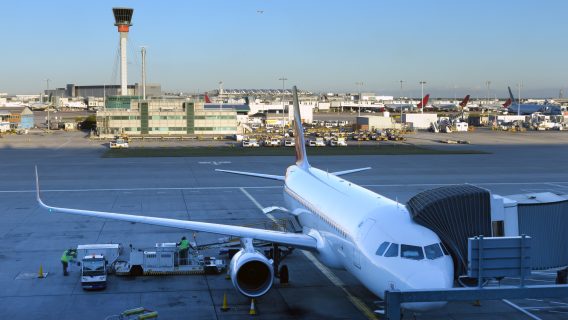
The Civil Aviation Bill is going through Parliament. It gives more powers to the Civil Aviation Authority and modernises the UK's aviation regulatory framework
Civil Aviation (Consumer Protection and Regulatory Reform) Bill [HL] 2026-27 (339KB PDF)
The Civil Aviation (Consumer Protection and Regulatory Reform) Bill [HL] (Bill 132 of 2026–27) will have its second reading in the House of Commons on Wednesday 9 September 2026. It had its first reading in the Commons on 1 September.
The bill started in the House of Lords, where it was introduced on 14 May 2026. It had its Lords second reading on 2 June 2026; committee stage on 16 and 18 June; report stage on 13 July; and third reading on 20 July.
The bill, together with its explanatory notes and other documents, is available on the parliament.uk bill page: Civil Aviation (Consumer Protection and Regulatory Reform) Bill [HL].
There has been limited reaction to the bill. A blog post by law firm Burges Salmon, Headwinds ahead for airlines? The UK Civil Aviation Bill explained, highlighted the Civil Aviation Authority’s (CAA’s) increased enforcement powers, as well as the bill’s focus on accessibility.
The majority of the bill extends and applies across the UK. The exceptions to this are two subsections of clause 11 relating to the allocation of slots at United Kingdom airports, subsection (4)(b) and (7), which do not extend to Northern Ireland.
The bill is a largely technical bill, which would make a number of changes to existing legislation following the UK leaving the EU to give the UK government powers to legislate on air passenger rights and airport slots.
The bill would grant the Secretary of State for Transport the powers to make regulations on air passenger rights through secondary legislation. This could include regulations covering issues such as flight disruption, lost or damaged luggage, accessibility, price transparency and airline liability for passenger injury or death.
The bill would also require the Secretary of State to consult on future passenger rights regulations within 12 months of the act coming into force. It would also require ministers to give due regard to strengthening passenger rights, particularly for disabled passengers and passengers with reduced mobility.
The bill would remove the compensation limit for wheelchairs, mobility aids and other assistive devices that are lost, damaged or destroyed on domestic UK flights (that is, flights that start and end within the UK).
The bill would also give the CAA direct powers to enforce consumer protection legislation. It would give the CAA powers similar to those held by the Competition and Markets Authority and extend its ability to enforce rules on airline transparency and the publication of lists of banned air carriers.
The bill would also require the Secretary of State to carry out a review of airport drop-off charges.
The bill contains measures linked to airspace modernisation. This is a programme that the CAA has said will support more direct flight paths, reduce holding patterns and improve efficiency. It would expand the Secretary of State’s powers to direct organisations involved in airspace change proposals to implement approved changes. These powers are intended to support the work of the new UK Airspace Design Service (UKADS), which the government describes as the “single guiding mind” for airspace change.
The bill would amend the framework for airport slots and air traffic services. Airport slots are permissions that allow airlines to use airport infrastructure at specific times. The bill would allow ministers to make regulations covering slot allocation, transfer, withdrawal and emergency arrangements. It would also broaden who may be charged for air traffic services and who may appeal licensing decisions.
The bill would give the CAA the power to make aviation safety rules. It would also restore the Secretary of State’s power to amend certain safety-related criminal sanctions through Air Navigation Orders. It would also increase the maximum penalty for some offences that endanger aircraft, people or property.
Members broadly supported the bill’s objectives at second reading on 2 June 2026, but disagreed on some of its details including the extent of powers delegated to the CAA, scrutiny of future regulations, disabled passengers’ experiences, airport expansion and airspace modernisation.
The Conservatives’ Lords transport spokesperson, Lord Moylan, said the bill would transfer too many responsibilities to regulators, and questioned the level of accountability that would apply to the CAA:
The Civil Aviation Authority is, in essence, a safety regulator, an economic regulator and a regulator of airspace. It is a very focused body and it is very good, but we are now giving it a far broader range of powers.
The Liberal Democrats’ Lords transport spokesperson, Baroness Grender, called for stronger passenger protections, including consideration of a statutory passenger charter, and highlighted continuing concerns about accessibility for disabled passengers. She also sought assurances that powers relating to airspace changes and airport slots would not be used to facilitate airport expansion without appropriate scrutiny.
The bill was considered in Grand Committee on the 16 and 18 June 2026. 136 amendments were tabled at committee stage, none of which were agreed to.
Report stage took place on 13 July 2026. 16 amendments to the bill were successfully made. 14 of these were technical government amendments. Two Conservative amendments were made. One changed the parliamentary procedure for certain regulations restricting CAA rule-making powers from the negative procedure to the affirmative procedure, and was supported by the government. The other added a requirement for the Secretary of State to review the impact of airport drop-off charges on passengers.
A further Conservative amendment was defeated following a division. This would have enabled airlines to recover the costs of compensation payments they made to passengers for disruption that was not their fault, such as disruption from air traffic control failures.
Civil Aviation (Consumer Protection and Regulatory Reform) Bill [HL] 2026-27 (339KB PDF)
On 18 June 2026 the Department for Transport (DfT) published the draft Heathrow Expansion National Policy Statement (HENPS), which provides a framework for how expansion might be implemented.
The 2025 Strategic Defence Review recommended the government explore options to create a new Reserve-style force to protect critical national infrastructure.

There will be a Commons debate on a motion on transport accessibility for disabled people on 26 March 2026