Local Housing Allowance: Help with rent for private tenants
Local Housing Allowance (LHA) sets maximum amounts private tenants can get in benefit support to help with rent
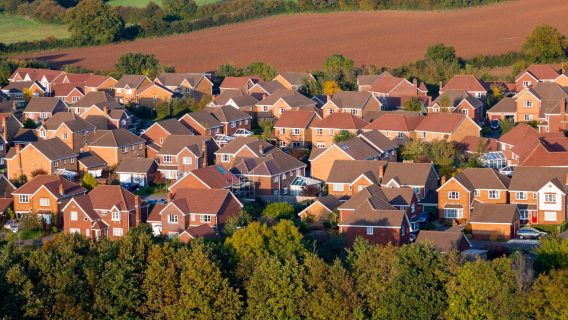
An overview of the statutory Right to Buy scheme in England, and the government's proposed reforms to the scheme.
The Right to Buy scheme in England (599KB PDF)
The government has announced changes to the Right to Buy scheme in England so that less social housing stock is lost.
The Right to Buy (RtB) scheme gives eligible local authority tenants in England the statutory right to buy their home at a discount to its market value. Since its introduction in 1980, more than two million homes have been sold through the scheme. The Labour government has identified the failure to replace homes sold under RtB as “a contributor to the urgent and rising need for social and affordable homes in most communities across the country”.
The government has announced changes to RtB, including reducing discounts available under the scheme, changing eligibility rules, exempting some newly-built properties from sale, and changing how RtB sales receipts can be used.
RtB was introduced in England in October 1980 as a route into home ownership for social housing tenants. It is governed by the Housing Act 1985.
Eligible local authority tenants can apply to purchase their home if they meet the qualifying conditions. The discount available depends on factors including the type of property, its value, its location and the tenant’s length of tenancy.
Successive governments have made changes to RtB. The last significant set of changes took place in the 2010s, with the aims of improving take-up and “rejuvenating” housing stock. These reforms included increasing discount levels, increasing maximum cash discount caps, and reducing the qualifying period from five years to three years, changing the rules governing the use of sale receipts and extending the cost floor period (a mechanism that prevents a property being sold for less than the amount spent on acquiring, building or improving it during a specified period).
From 1980/81 to 2024/25, there have been over two million sales to tenants through RtB, representing 90% of all recorded social housing sales. Of the sales under RtB, 94% have been sales of local authority housing. The remaining 6% of sales were of housing association properties through preserved or voluntary Right to Buy.
In 2024/25, there were 9,236 sales of social housing through the RtB scheme, 7% higher than the sales in 2023/24. Of the sales in 2024/25, 94% were local authority housing.
In 2024/25, local authorities received around £798 million through RtB sales. This was 16% higher than the year before, but 31% lower than the peak in 2022/23.

The Ministry of Housing, Communities and Local Government (MHCLG) publishes data on the replacement of social housing properties using receipts of Right to Buy sales. The number of replacements is calculated from the sum of starts (properties where building has commenced) and acquisitions. In 2024/25 there were 3,593 properties started or acquired by local authorities, Homes England and the Greater London Authority. The majority of these replacements (60%) were acquisitions while the remaining 40% represented housing starts on site.
There is a one-to-one replacement target for Right to Buy in which every additional Right to Buy sale since the reinvigoration of the scheme in 2012 above a 2010 baseline, must be replaced by a new affordable home nationally within three years.
Since 2017/18, the target hasn’t been met. Additionally, the gap between the cumulative replacements and the target has increased each year other than in 2023/24. MHCLG explains the reduction in the gap in 2023/24 is “a direct result of the drop in eligible sales seen in 2020-21, which coincided with restrictions introduced in response to the COVID-19 pandemic.”
Following the government’s response to the consultation on Reforming the Right to Buy (2 July 2025), MHCLG will no longer report on the replacement target.
The government announced changes to RtB in the Autumn Budget 2024 and subsequently consulted on wider reforms.
From November 2024, maximum cash discounts were reduced to regional levels ranging from £16,000 to £38,000. The government also increased the cost floor period from 15 years to 30 years and allowed local authorities to retain all receipts from RtB sales.
Following consultation, in July 2025 the government confirmed plans to:
The government expects these reforms to substantially reduce the number of properties sold under RtB. It estimates that 1,650 properties will be sold in 2026/27, falling to 1,250 by 2035/36.
Several of these measures require changes to primary legislation. These are contained in the Social Housing Bill [HL] 2026-27, announced in the 2026 King’s Speech.
The Right to Buy scheme in England (599KB PDF)
Local Housing Allowance (LHA) sets maximum amounts private tenants can get in benefit support to help with rent
The Social Housing Bill [HL] 2026-27 is scheduled to have its second reading in the House of Commons on 10 September 2026.
This briefing provides an overview of amendments made to the Renters' Rights Bill 2024-25 in the House of Lords.
