How does the Commonwealth respond to human rights concerns?
The Commonwealth funds human rights work, observes elections, and can suspend its members. Challenges include democracy and LGBT+ rights.

This research briefing provides information on conflict-related sexual violence, and the UK Government’s approach.
Conflict-related sexual violence and the UK's approach (308KB PDF)
Warning: This briefing covers themes related to sexual violence, which readers may find distressing.
Conflict-related sexual violence (CRSV) takes many forms and is defined by the UN as including “rape, sexual slavery, forced prostitution, forced pregnancy, forced abortion, enforced sterilization, forced marriage and any other form of sexual violence of comparable gravity” that is directly or indirectly linked to armed conflict. It is committed by state and non-state groups and individuals during periods of armed conflict.
The UN Secretary General publishes annual reports on CRSV. The most recent annual report, covering 2024 and published in August 2025, focuses on 21 countries and territories for which information verified by the UN exists. While not covering the global prevalence of CRSV, the report lists 63 actors who are “credibly suspected” of committing or being responsible for CRSV. It reported that sexual violence was “used as a tactic of war, torture, terrorism and political repression” and “impunity […] remained the norm”.
In 2012, the UK Government launched the Preventing Sexual Violence in Conflict Initiative (PSVI). Under the PSVI, experts are deployed to support local bodies with medical, legal, security and psychological expertise. They do not gather evidence or provide direct support to survivors. The UK also aims to foster collaboration between states and international organisations to end CSRV. This includes challenging attitudes, providing better services and justice for survivors, and improving how armed groups globally address CRSV.
The Labour government has confirmed it will continue the PSVI. The Minister for Africa and the UN, Lord Collins, was appointed the UK’s Special Envoy for PSVI in November 2024. Lord Ahmad held the role from 2017 to 2024.
In 2020, the Independent Commission for Aid Impact rated the UK’s PSVI as “amber-red” (the second-lowest score), and said the initiative had a “lack of senior leadership, poor strategy, and cuts in funding”. The government accepted most of the recommendations and launched a new strategy (see above). In a 2022 review of progress, the commission said the development of new country and strategic plans were a “strong” response to its findings.
In a 2021 Commons debate, the then chair of the of the All-Party Parliamentary Group on PSVI, Anthony Mangnall, argued that the PSVI had become less of a priority for the government. He recommended a new funding arrangement for 10 years, a new international body to collect evidence of CRSV, and restoring responsibility for the PSVI to the Foreign Secretary.
In November 2022, the Conservative government launched a new PSVI strategy, and committed up to £12.5 million from 2022 to 2025.
The strategy has four objectives:
Countries targeted for UK support were to be selected on their level of need, UK influence, the host country’s political will and value for money.
In 2024, PSVI teams were deployed in Ethiopia, Iraq, Ukraine, and Israel and the Occupied Palestinian Territories. PSVI teams were deployed overseas 107 times between 2012 and January 2024.
The Labour government says it is committed to the strategy, and in July 2025 confirmed it was “considering our future approach”. The PSVI has a range of sources of funding and future aid budgets will be published in Autumn 2025.
The UK has raised concerns about CRSV at the UN and international meetings on CRSV. The UK also applies sanctions against those judged to have committed CRSV. In 2022, the UK held a global PSVI conference and launched a global code on CRSV.
Wider UK aid for women and girls also aims to address gender-based violence, support the economic and political empowerment of women and girls, and support sexual health services and reproductive rights.
For more information, see the seperate Commons Library research briefing, UK aid and women and girls.
Conflict-related sexual violence and the UK's approach (308KB PDF)
The Commonwealth funds human rights work, observes elections, and can suspend its members. Challenges include democracy and LGBT+ rights.
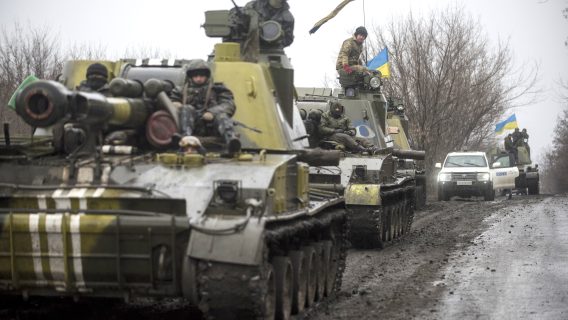
This paper provides a timeline of the major events in the Ukraine-Russia conflict since the 2022 Russian invasion.
The five Nordic countries – Denmark, Finland, Iceland, Norway and Sweden – work closely together through the Nordic Council and Nordic Council of Ministers