Conflict in Ukraine: A timeline (current conflict, 2022 – present)
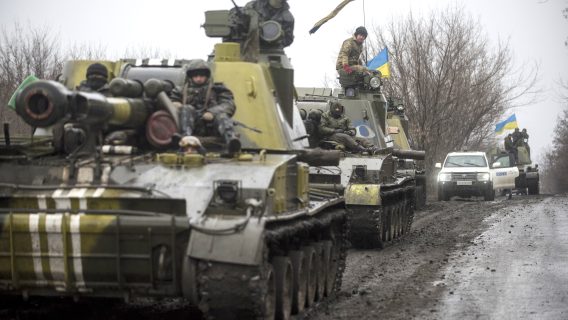
This paper provides a timeline of the major events in the Ukraine-Russia conflict since the 2022 Russian invasion.
A Westminster Hall debate, relating to the e-petition on the UK re-joining the EU, is scheduled for 12 October 2026. The debate will be led by Tony Vaughan MP.
The debate on e-petition 749128 was scheduled by the Petitions Committee. The petition calls for the UK to rejoin the European Union as soon as possible to increase economic growth in the UK. It closed on 8 June 2026 and received 111,687 signatures.
The petition refers to a forecast from the Office for Budget Responsibility (OBR), the UK’s official independent economic forecaster, expecting UK Gross Domestic Product (GDP) to be 4% lower in the long run compared with a scenario where the UK remained in the EU. The petition calls on the UK to apply to rejoin the EU to reverse this trend and boost economic growth.
This is an updated version of a briefing published in March 2025 in relation to a Westminster Hall debate held on 24 March 2025 on a similar petition calling on the UK to apply to join the EU.
For further discussion of the impact of Brexit, see Commons Library, Debate on impact of the 2016 EU membership referendum on the UK prepared for a Westminster Hall debate on this theme held on 2 September 2026.
The government responded to the petition on 7 January 2026, stating that the UK “will not be rejoining the EU” and that the government had “reset its relationship with the EU with a new strategic partnership” with a deal that was “good for UK bills, borders, jobs and growth”.
The government response referred to its mandate, set out in the Labour party’s 2024 general election manifesto, to strengthen the UK’s relationship while ruling out any return to the EU single market, customs union and freedom of movement.
It said that since taking office in July 2024, Keir Starmer’s government had reset relations with the EU, including through the commitments to strengthen cooperation announced at the UK-EU summit on 19 May 2025. The government referred to commitments agreed at the summit to negotiate a sanitary and phytosanitary (SPS) agreement (relating to food and agricultural standards), which it said would reduce trade barriers, and an agreement linking UK and EU emissions trading schemes (ETS) which it said would “allow a cheaper transition to net zero”.
The UK and EU also announced a new strategic partnership (PDF) and a security and defence partnership at the May 2025 summit and agreed to work towards a UK-EU youth experience scheme and the UK rejoining the EU Erasmus+ youth and educational exchange programme.
The government response to the petition referred to the agreement announced by the UK and EU in December 2025 on UK participation in the Erasmus+ programme and said that it was working to conclude negotiations on the youth experience scheme and SPS and ETS agreements by the time of the 2026 EU-UK summit. In their December 2025 announcement, the UK and EU said they were aiming to reach agreements on SPS, ETS and a UK-EU youth experience scheme by the 2026 summit.
For further details on the initial UK-EU reset discussions, and EU reaction in 2024 and early 2025 see Commons Library research briefing, Resetting the UK’s relationship with the European Union (March 2025).
The outcomes of the May 2025 summit are discussed in more detail in the Commons Library research briefing The UK-EU reset: Next steps after the May 2025 summit (July 2025). See also the later update on UK-EU reset developments in Commons Library research briefing, The 2026 review of the Trade and Cooperation Agreement and the UK-EU reset (November 2025).
For further details on the agreement on UK participation in Erasmus+ see Commons Library research briefing, UK-EU reset: Agreement on UK participation in the EU Erasmus+ programme (December 2025)
The UK and the EU announced on 16 June 2026 that the 2026 UK-EU summit would be held on 22 July. However, following Keir Starmer’s announcement of his resignation as Prime Minister on 22 June, the summit was postponed.
While reports over the summer of 2026 said the talks on the EU SPS and ETS agreements were close to conclusion, they indicated that reaching an agreement on a youth experience scheme was proving more difficult.
Shortly before taking over as Prime Minister in July 2026, Andy Burnham said he wanted his government to consolidate the progress made in the previous UK–EU negotiations and “make further progress quickly”. In May 2026, during his campaign for re-election to parliament, Mr Burnham said he saw a “long-term case” for rejoining the EU but that he was not proposing this and that “the last thing we should do right now is rerun those [Brexit] arguments.”
Hamish Falconer, who was appointed as Minister for European Relations in Andy Burnham’s government in July 2026, said in an interview in August 2026 that he wanted “a sense of renewed pace” in the reset discussions and “a deeper […] more ambitious relationship with the EU”. Mr Falconer said the government will maintain the “red lines” set out in the Labour Party’s 2024 election manifesto.
In an interview in August 2026, Mr Burnham said a UK-EU summit could be held in November and that the relationship with the EU needed to be fixed “in an amicable way that will add percentage points to our growth”.
Reports in September 2026 suggested the UK-EU summit was being delayed further with the UK government seeking to add the EU’s “made in Europe” proposals to the agenda. The UK government has expressed concerns about the EU plan, which is aimed at limiting some public and corporate spending in the EU to EU-made products, and the government is reportedly seeking to have UK products categorised as European under the plan.
The Prime Minister said he would be raising this issue in his first meeting with the European Commission President, Ursula von der Leyen, which took place on 23 September 2026.
According to a report in the Financial Times on 30 September, the UK and EU had agreed the outline of a deal on youth experience, SPS and ETS and the UK-EU summit date had been pencilled in for 20 November 2026. Discussion on UK involvement in the EU’s “made in Europe” plan would be held back until the EU had finalised the plan.
In his speech to the Labour Party conference on 29 September 2026, the Prime Minister said he would take the opportunity around the UK-EU summit later in the year to lay out to the country “what I believe the different options are for Britain’s long-term relationship with our European partners”. He also said that Brexit had “done more harm than good” and to give Britain a clear path, there was a need to “decide on a long-term relationship with what is still our largest market” and that he would seek to find consensus around one of the options.
In interviews on 30 September 2026, Mr Burnham said these options could involve a UK-EU customs union, the UK joining the EU single market, or going “all the way”. The Prime Minister also said that a referendum on the UK seeking to rejoin the EU “wouldn’t be the right thing to do right now” but that “things are possible” in a future Labour Party election manifesto.
The UK in a Changing Europe thinktank published a report in June 2026 outlining potential options for the future UK-EU relationship, some of which involve closer UK integration with the EU. It highlights potential economic gains, in terms of higher projected GDP, for some of these options but states that this will involve “trade-offs” that include loss of political control. For example, the option viewed as bringing the largest economic gain – participation in the EU single market – would oblige the UK to adopt a large body of EU rules without participating in EU decision-making in setting the rules (unless the UK rejoined the EU) and to agree to freedom of movement of people. As part of the report, UK in a Changing Europe has published a “staircase” model setting out these trade-offs.
Applications to join the EU are made to the Council of the EU (ministerial representatives of each member state) under Article 49 of the Treaty on European Union (TEU).
Article 49 of the TEU provides that EU membership is open to European countries that respect certain EU values set out in Article 2 TEU, relating to respect for human rights, democracy and the rule of law. Decisions on applications are taken unanimously by the Council after consulting the European Commission and receiving the consent of the European Parliament. A European Parliament consent vote requires a majority of all MEPs to vote in favour.
The European Council (EU heads of states and government) has set out criteria that countries seeking to join the EU need to meet, involving stable institutions guaranteeing democracy, a functioning market economy, and the ability to take on and implement the obligations of membership. EU accession negotiations focus on ensuring accession states are ready to implement the EU’s body of law, with the European Commission issuing recommendations at different stages of the accession process regarding the candidate state’s alignment with EU rules and readiness to the join the EU.
The accession process can be lengthy, notably for states where there have been recent transitions to democracy and which are much less economically developed. However, where states have a similar level of development to existing member states, the process can be relatively quick. For example, the process from submitting a membership application to joining the EU for Finland was three years from 1992 to 1995.
Further details of how the EU accession process works are provided in the House of Commons Library briefing paper, EU enlargement: Ukraine, the Western Balkans and the accession process (March 2024).
Some commentaries have discussed the potential EU reaction if the UK were to seek to join the EU, suggesting that some member states may be reluctant to agree to a UK return to the EU. Reasons for this include a concern that the membership issue would remain a point of contention between political parties in the UK and that a future UK Government might seek to take the UK out of the EU again.
Other commentaries have cited former EU officials or Members of the European Parliament (MEPs) suggesting that the EU would take a positive stance if the UK sought to rejoin the EU, but that the UK would be expected to rejoin on “standard terms” rather than with the opt-outs it previously had as a member state (see below). The EU’s former Brexit negotiator, Michel Barnier, and other EU sources have indicated that if the UK applied to join the EU, the process could be fast-tracked, given the UK’s pre-existing alignment with the EU. According to an EU source cited by the Independent newspaper in May 2026, the timeline for a UK application to join the EU could be comparable to the relatively short period it took Finland to join in the 1990s.
Following Andy Burnham’s comments on the UK’s long-term relationship with the EU at the end of September 2026, French President Emmanuel Macron said it would be “very good news” if the UK wanted to rejoin the EU. Spanish Prime Minister Pedro Sánchez said Spain would welcome the UK back “with open arms”. The EU’s Ambassador to the UK, Jukka Salovaara, said that the “ball is very much with the UK” in terms of looking at the options “and then the EU [will be] ready to engage”.
Commentaries have observed that if the UK applied to join the EU, the UK would no longer be guaranteed the opt-outs and special arrangements it had previously as an EU member state. These include the opt-out that the UK had from adopting the euro, from provisions establishing the Schengen border-free area in EU law and other common provisions on justice and home affairs policy and its rebate on its EU budget contribution.
The EU has referred to the need for new states joining the EU to commit to adopting the single currency when they have met the criteria to do so. However, while one member state (Denmark) has an explicit opt-out from joining the single currency, other member states have also indicated that they do not intend to adopt the euro or have not taken the steps needed to meet criteria for joining. These criteria include membership of the EU’s Exchange Rate Membership (ERM II), linking national currencies to the euro so that their exchange rate cannot fluctuate from the euro’s value by more than 15%. Membership of ERM II is voluntary, and there are several non-eurozone member states that have not joined it.
The opt-out on provisions relating to the establishment of the Schengen area and other justice and home affairs provisions also to apply to Ireland. These relate partly to the retention of the UK and Ireland of a separate common travel area, but also to Ireland’s desire to protect distinctive features of its legal system.
Rebates on financial contributions to the EU budget also continue to be in place for some EU member states.
In an interview in early May 2026, Poland’s Foreign Minister and deputy Prime Minister, Radosław Sikorski, said that Poland would vote in favour of the UK rejoining the EU if the UK applied to rejoin, but that the UK would “not get the same deal as it had before”. However, in an interview in June 2026, Michel Barnier said it would be possible for the UK to rejoin the EU and regain the opt-outs it had on euro membership and Schengen, noting that other member states had opt-outs in these areas. He said he did not want to comment on whether the UK would also regain its budget rebate. Any opt-outs would be subject to negotiation, and to a decision by the EU.
Potential derogations for a country joining the EU could be set out in the accession treaty which sets out the terms and conditions of membership of a prospective EU member state once accession negotiations have been concluded. The accession treaty needs to be unanimously approved by the Council of the EU and needs to pass a consent vote in the European Parliament. As set out in Article 49 TEU, accession agreements also need to be ratified by all EU member states of the EU and the applicant state in accordance with their respective constitutional requirements before accession can proceed.
Among opposition parties, the Conservatives and Reform UK oppose the UK joining the EU and the commitments made by the UK and EU to strengthen cooperation since 2024. The Liberal Democrats support the UK joining the EU single market and a customs union with the EU. The Green Party, the Scottish National Party (SNP) and Plaid Cymru have stated their support for rejoining the EU.
The Conservative Party manifesto for the 2024 general election (PDF) emphasised the importance of the UK’s “post-Brexit freedoms”. The Conservatives have subsequently said they would oppose new UK-EU agreements that involve an obligation for the UK to align with EU laws.
Following the May 2025 UK-EU summit, Conservative Party leader Kemi Badenoch said that the Labour government was quietly “shamefully, and deliberately” dragging the UK back into the EU and that a future Conservative government would reverse the commitments made by the Labour government with the EU at the summit.
In October 2026, deputy leader of the Conservative Party Alex Burghart said a future Conservative government would “rip up” the agreements expected to be announced at the UK-EU summit in late 2026.
The Reform UK 2024 manifesto referred to the need to “grasp the huge opportunities of Brexit” and called for the scrapping of remaining EU-derived legislation in the UK (laws adopted through EU membership obligations that were assimilated into UK domestic law following Brexit), and the partial abandonment or renegotiation of the post-Brexit UK-EU treaties. Following Andy Burnham’s comments in late September 2026 on setting out options for the future UK-EU relationship, Reform UK deputy leader Richard Tice said the Prime Minister was “trying to sneak us back into Brussels via the back door” and that Reform would “never let this betrayal go unchallenged”.
The Liberal Democrats manifesto for the 2024 general election (PDF) proposed a staged approach to rebuilding the UK’s relationship with the EU, with the eventual objective of the UK rejoining the EU single market. In June 2026, Liberal Democrat leader Ed Davey said the UK should begin talks immediately with the EU on joining the EU’s single market and a customs union.
Following the adoption of a declaration by the European Green Party in May 2026 stating that it would welcome the UK rejoining the EU, a spokesperson for the Green Party of England and Wales said: “Brexit has been a disaster and we have always said we should rejoin the EU when the political circumstances are right”. In September 2026, Green Party leader Zack Polanski said that that the Green Party view was that “we should rejoin the customs union to start reversing the damage” and that full membership of the EU remains the best option for the UK”.
The SNP advocates for an independent Scotland joining the EU. Plaid Cymru states that Wales’s best interests are best served by returning to full membership of the EU and the UK should urgently seek to rejoin both the single market and customs union. In October 2026, Plaid Cymru leader Westminster leader Liz Saville Roberts called on the Prime Minister to back rejoining the EU now.
This paper provides a timeline of the major events in the Ukraine-Russia conflict since the 2022 Russian invasion.
The five Nordic countries – Denmark, Finland, Iceland, Norway and Sweden – work closely together through the Nordic Council and Nordic Council of Ministers

The US, Denmark, and Greenland (an autonomous territory of Denmark), have signed a new agreement on the defence of Greenland. It expands the US’s military presence in Greenland and gives it a greater role in the island's security.