The United Kingdom constitution – a mapping exercise
A briefing paper which "maps" (or summarises) the main elements of the United Kingdom's uncodified constitution.

Austria held legislative elections on 29 September 2024. 183 members of the National Council were elected. As no party gained a majority of seats in the legislature, coalition talks to form a government continue.
Austria: 2024 federal election (601KB PDF)
Nine parties fielded candidates in all constituencies, while a further three parties contested specific provinces.
The right-wing Freedom Party of Austria led the polls ahead of election day, with its leader, Herbert Kickl, campaigning under the slogan: “Fortress Austria — closing borders, guaranteeing security.”
The key issues viewed as important by voters in the run-up to the election were the rising cost of living and immigration. Security had also increasingly become a key concern for voters, following the thwarting of a planned terrorist attack on Taylor Swift’s Vienna concerts.
Austria’s Federal Ministry of the Interior officially announced the final election results on 3 October. A total of 4,882,888 valid votes were cast, with a high turnout of 77.3%.
As predicted by the pre-election polling, the Freedom Party (FPÖ) won the most votes and gained 57 seats in the National Council. The incumbent People’s Party was second and secured 51 seats.
Although the FPÖ won the most seats in the legislature, it fell short of the 92 seats required to form a government.
The other parties refused to enter a coalition with the FPÖ so, on 22 October, President Van der Bellen asked incumbent Chancellor Karl Nehammer to form a coalition government and to begin talks with the third-placed Social Democrats.
Austria: 2024 federal election (601KB PDF)
A briefing paper which "maps" (or summarises) the main elements of the United Kingdom's uncodified constitution.
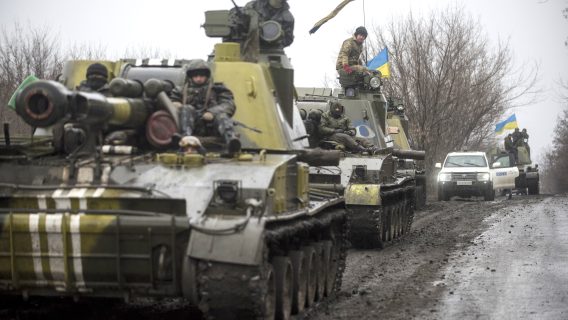
This paper provides a timeline of the major events in the Ukraine-Russia conflict since the 2022 Russian invasion.
The five Nordic countries – Denmark, Finland, Iceland, Norway and Sweden – work closely together through the Nordic Council and Nordic Council of Ministers
