How does the Commonwealth respond to human rights concerns?
The Commonwealth funds human rights work, observes elections, and can suspend its members. Challenges include democracy and LGBT+ rights.

What air defence capabilities does the UK have to protect the UK homeland and what did the recent Strategic Defence Review say?
UK defence in 2025: Integrated air and missile defence (419KB PDF)
Changes in the geopolitical environment, the nature of the conflict in Ukraine and developments in missile and unmanned systems technologies have increased attention on air and missile defence and the ability of the UK to defend itself.
The UK adopts a “multi-layered approach to air and missile defence” of the UK homeland, including in collaboration with allies.
The armed forces operate air defence assets across all three services which can be deployed for localised defence of the UK mainland, should they be required. That capability is supported by an extensive early warning radar network in the UK, which also forms a part of NATO’s Integrated Air and Missile Defence (NATO IAMD) system, of which the UK is a part, and the US ballistic missile defence system.
The UK does not have a ballistic missile defence capability akin to Israel’s air defence system, often referred to as the ‘Iron Dome’. The Royal Navy is the only service that operates a ballistic missile defence capability.
As a NATO ally, the UK is part of NATO’s Integrated Air and Missile Defence system (NATO IAMD).
Work is underway with allies to strengthen cooperation on the integration and interoperability of different air defence systems across the NATO alliance (the Delivering Integrated Air and Missile Operational Networked Defences/DIAMOND initiative).
In 2022, the UK also signed a Letter of Intent to join the European Sky Shield initiative (ESSI), led by Germany. The ESSI seeks to establish a multi-layered, ground-based integrated European air defence system, with an anti-ballistic missile capability, through the common acquisition of air defence equipment and missiles by participating European nations. By the end of 2024 there were 23 participating nations in the project, albeit with some notable exceptions including France, Italy and Poland.
Given the changing nature of the aerial threat, the UK is considered by many to be increasingly vulnerable.
Several commentators have called for the development of a UK missile defence shield, or ‘iron dome’, akin to Israel’s air defence system. Others disagree, with some calling for more targeted measures including the deployment of military assets to protect major population centres and the UK’s critical national infrastructure.
Any measures to increase the UK’s air defence capabilities, either through existing programmes or by procuring off-the-shelf solutions, are likely to be costly, potentially technologically complex and will take time to deliver.
The government said that air defence has become “increasingly important” and would be considered as part of its Strategic Defence Review (SDR).
That review was published on 2 June 2025. Recognising its importance, the government announced that £1 billion would be invested in integrated air and missile defence, although the SDR provided no detail on where that investment would be focused. A Defence Investment Plan is due to be completed in the autumn, which might provide some clarity.
UK defence in 2025: Integrated air and missile defence (419KB PDF)
The Commonwealth funds human rights work, observes elections, and can suspend its members. Challenges include democracy and LGBT+ rights.
A briefing paper which "maps" (or summarises) the main elements of the United Kingdom's uncodified constitution.

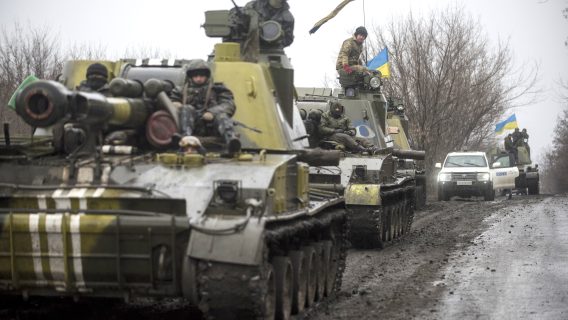
This paper provides a timeline of the major events in the Ukraine-Russia conflict since the 2022 Russian invasion.