How does the Commonwealth respond to human rights concerns?
The Commonwealth funds human rights work, observes elections, and can suspend its members. Challenges include democracy and LGBT+ rights.

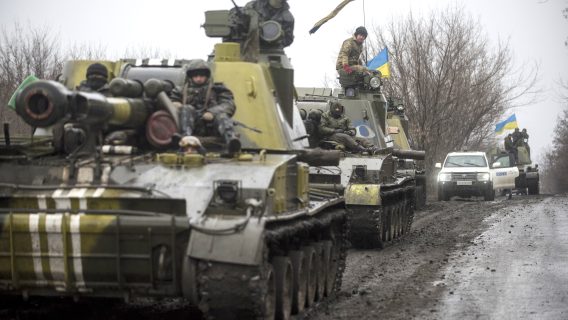
Part of proposals for securing any future peace deal in Ukraine is the deployment of a European-led multinational force, or Coalition of the Willing.
Proposals for a Coalition of the Willing in Ukraine (179KB PDF)
Since March 2025, several countries, led by the UK and France, have been working to develop a Coalition of the Willing to defend any peace deal that is eventually agreed in Ukraine.
In January 2026, the UK and France signed a Declaration of Intent with Ukraine to deploy military forces on the ground in the event of peace deal. Alongside personnel from contributing nations, those forces will conduct deterrence operations across all domains (land, sea and air) and conduct training, planning and the regeneration of Ukraine’s armed forces and capaibilities. Those forces will be supported by a network of military hubs that will be established across Ukraine.
No details have been provided, however, on the size and composition of any multinational force, the capabilities required, or the potential contributions by other countries. There are also questions over the length of any deployment, the ability of the UK armed forces to meet this commitment and the exact nature of the rules of engagement, including the ability of any multinational force to respond to ceasefire violations and/or the resumption of Ukraine/Russia hostilities, and to defend itself against Russian attack.
The UK Government has previously said that “It is important to maintain discretion when commenting on the specific details of discussions and planning, until the conditions of the necessary ceasefire are clear”. Ukraine has said that it is ready to issue an invitation to the multinational force and enter into formal agreements with participating nations as and when necessary. Those agreements will be based on the 1951 NATO Status of Forces Agreement governing the deployment of NATO forces in another allied country.
Despite initially saying that the US would not provide Ukraine with any form of security guarantees, in August 2025 President Trump indicated that the US could offer some form of backing to the coalition. Details of what US support and coordination could look like are limited but it is unlikely to involve US boots on the ground.
Russia rejects the deployment of European peacekeepers in Ukraine to monitor and enforce any peace agreement, calling it “demonstrably unviable”.
Proposals for a Coalition of the Willing in Ukraine (179KB PDF)
The Commonwealth funds human rights work, observes elections, and can suspend its members. Challenges include democracy and LGBT+ rights.
A briefing paper which "maps" (or summarises) the main elements of the United Kingdom's uncodified constitution.

This paper provides a timeline of the major events in the Ukraine-Russia conflict since the 2022 Russian invasion.