The United Kingdom constitution – a mapping exercise
A briefing paper which "maps" (or summarises) the main elements of the United Kingdom's uncodified constitution.

This briefing sets out the international and UK law on genocide and discusses recent cases on this issue. There will be a general debate on obligation to assess the risk of genocide under international law in relation to the Occupied Palestinian Territories in the Commons chamber on Thursday 5 February 2026.
The obligation to prevent genocide (412KB PDF)
Genocide is a crime under international law, according to the United Nations General Assembly.
The 1948 Genocide Convention, which has 153 parties requires party states to punish those responsible for genocide.
The convention also requires states to prevent genocide from occurring. While it does not set out how they must do this, judgments on cases before the International Court of Justice (ICJ) have clarified some details of the obligation.
Judicial decisions from the International Court of Justice suggest that:
While the UK is a party to the Genocide Convention, the obligation to prevent genocide is not explicitly set out in UK statute.
Under the International Criminal Court Act 2001, genocide and recognised ancillary acts are criminal offences. However, the legislation does not make the failure to prevent genocide a domestic crime. This applies to acts committed in the UK or by UK nationals abroad.
It is the Government’s long-standing policy that only a “competent court” (such as the International Criminal Court or the ICJ) can formally determine whether a genocide has occurred.
Despite the policy on formal determination, the Government states that it assesses the risk of genocide when making decisions, such as those regarding arms export licences.
In 2025, the High Court dismissed a claim regarding arms exports to Israel in the case of R (on the application of Al-Haq) v Secretary of State for Business and Trade [2025] EWHC 1615 (Admin). The Court ruled that the obligation to prevent genocide was non-justiciable domestically, meaning it could not enforce the international obligation without a “domestic footing” in UK law. The Court’s review was restricted to administrative law principles: determining whether the Government’s decision-making process was “rational” and “tenable.” The Court concluded that it was.
There is significant legal disagreement regarding the implications of “provisional measures” issued by the International Court of Justice (ICJ), such as those in the South Africa v Israel case.
The UK Government argues that the ICJ’s imposition of provisional measures does not equate to a confirmation that there is a “serious risk” of genocide, which is the threshold required to trigger the duty to prevent.
The claimants in the High Court case argued that the ICJ’s order proved there was a “serious risk” of genocide, triggering the UK’s duty to prevent.
The UK Government argues that the ICJ’s test for provisional measures (which asks if rights are “plausible” and at risk of prejudice before the final decision in the case) is legally distinct from and lower than the threshold for confirming a “serious risk” of genocide. This threshold would trigger the UK and other states’ obligation to prevent genocide. Therefore, the Government contends that the provisional measures order in this case does not indicate that a serious risk of genocide exists. The nuanced legal issues are set out in the full briefing.
The obligation to prevent genocide (412KB PDF)
A briefing paper which "maps" (or summarises) the main elements of the United Kingdom's uncodified constitution.
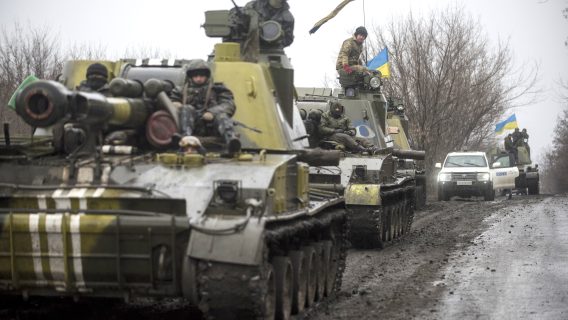
This paper provides a timeline of the major events in the Ukraine-Russia conflict since the 2022 Russian invasion.
The Northern Ireland Troubles Bill 2024-26 was introduced in the House of Commons on 14 October 2025. It was carried over to the 2026-27 session and is due to be considered by a Committee of the Whole House on 19 and 20 October 2026
