Flood risk management and funding
This briefing paper provides an overview of flood and coastal risk management in the UK, including which bodies manage risk, current policy on flood risk management, and how flood funding works.

A briefing on fracking policies in the UK and evidence on the link between fracking injection volumes and the risk of earthquakes, to support a debate on the potential merits of a full ban on fracking.
Debate on the potential merits of a full ban on fracking (181KB PDF)
A debate on the potential merits of a full ban on fracking is scheduled for Tuesday 15 September 2026. In the representations made to the Backbench Business Committee on 13 January 2026, Pippa Heylings MP set out that the purpose for this debate was to discuss current exemptions to the existing moratorium on fracking, such as for low-volume fracking (also known as ‘proppant squeeze’).
Hydraulic fracturing (also known as fracking) is a technique used to extract natural gas or oil from subterranean rock by injecting a mixture of water, sand and chemicals (known as ‘fracturing fluid’) at high pressure into drilled boreholes (also referred to as ‘wells’). The water mixture opens up cracks (or ‘fractures’) in the rock and the sand lodges into the spaces to keep them open, allowing the released gas/oil to flow out. Fracturing fluid flows back to the surface (known as ‘flowback’) over the lifetime of the well.
Currently, there are moratoriums on fracking in each of the four parts of the UK. These have been in place since 2015 in Scotland, Wales and Northern Ireland and since 2019 in England. This is largely due to safety concerns after fracking in England resulted in earthquakes (also referred to as induced seismicity). In addition, both the UK Government and Northern Ireland Executive are pursuing full bans on fracking via legislation.
However, in England, this moratorium does not apply to low-volume fracking, which involves lower volumes of injected fluid. The UK Government has stated that there is insufficient evidence that low-volume fracking has the same risks as high-volume fracking.
While academic research (PDF) has linked increasing injection volumes during fracking with increasing seismicity, it also acknowledges that other factors, such as geology and tectonics (the structure of the earth’s crust) are important factors.
Debate on the potential merits of a full ban on fracking (181KB PDF)
This briefing paper provides an overview of flood and coastal risk management in the UK, including which bodies manage risk, current policy on flood risk management, and how flood funding works.
This briefing outlines the various financial support available across the UK for installing energy efficient measures, heating and renewable energy in homes.

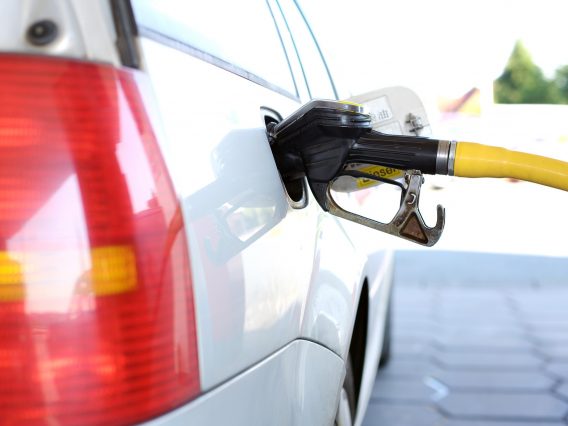
Petrol and diesel prices hit record highs in July 2022. They had fallen back substantially, but have spiked since the start of the Middle East conflict.