Complaining to the Local Government and Social Care Ombudsman
How to take complaints about services provided by local authorities to the Local Government and Social Care Ombudsman.

How are local boundaries are made and what considerations prompt mergers and restructures?
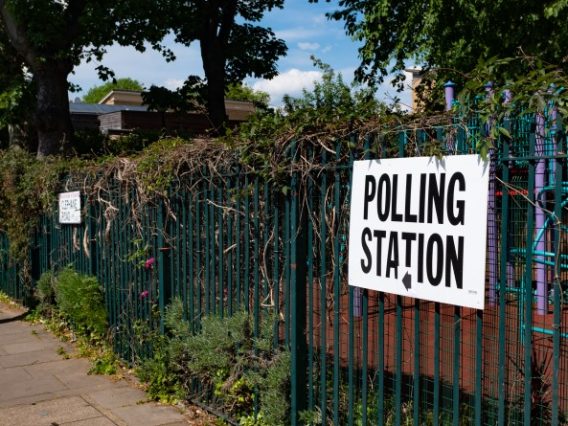
On 2 May 2019, voters will go to the polls to elect
councillors for 216 out of 343 local councils in
England. The pattern of elections – which
councils are holding them in 2019 and which are not – is largely due
to historical accident. They include metropolitan districts in large urban
areas such as Manchester, several dozen district councils, 30 unitary
authorities, and mayoralties in Copeland, Mansfield, Middlesbrough, Bedford,
Leicester,and the new North of Tyne
Combined Authority. But historical accident also influences the geographical
shape of council areas themselves – a matter that may rise up the political
agenda given the focus
on ‘place’ in the wake of the 2016 EU referendum.
This Insight examines how local boundaries are made and what
considerations prompt mergers and restructuring.
In 2019, some newly-formed authorities will hold their first
elections after a merger. These are the district councils of West Somerset and
Taunton; East Suffolk; and West Suffolk; and two new unitary authorities –
Dorset, and ‘Bournemouth, Christchurch and Poole’. Each of those restructures
has its own story. West Somerset and Taunton Deane agreed to merge following West
Somerset’s severe financial difficulties. East and West Suffolk’s creation
followed years of joint working and shared services by their predecessor
authorities. This was also true of the Dorset restructures, but these faced
intense local opposition, in Christchurch in particular, culminating in
a failed legal attempt to halt the merger.
Many of the elections taking place in May are ‘elections by
thirds’. Councillors sit for four-year terms. One-third of councillors face
re-election each year, and there are no elections in the fourth year. This
system has been the norm in district councils since 1974.
Meanwhile,
elections in the district councils in Buckinghamshire and Northamptonshire have
been postponed in anticipation of a restructuring, with unitary authorities
expected to come into being in April 2020.
The geographical areas of English local authorities have often emerged from decisions taken long ago, often for reasons that are less than clear today. The primary influence on them is the comprehensive restructuring of English local government in 1974.
The 1974 restructuring is unique in English history. It
applied to the whole of England and Wales (except for London, which had been
restructured in 1964). It also attempted to balance a number of explicit
criteria for creating units of local government. These included:
Since 1974, governments have presided over a number of
mini-restructurings. Each one has featured a different balance between these
five approaches. The most recent ones, in 2007-09 and the minor changes since
2017, have focused overwhelmingly on scale,
efficiency, and value for money. This was to the almost total
exclusion of either ‘affective identity’ or economic activity. This implies a
policy perspective that regards local government as an effective means of
providing local public services. Governments since 2010 have not actively
promoted mergers; not wishing to be seen to invite disruption.
Most changes to English council areas in recent decades have
followed a ‘building blocks’ approach to restructuring. The units of local
government established in 1974 have been merged into larger areas. Current Government policy follows this pattern, favouring the creation of unitary
authorities covering 300,000 – 700,000 people, based on existing district and
county areas.
This approach is
convenient and simple, but it may have drawbacks, particularly in the context
of recent attention being paid
to ‘place-shaping’. This phrase denotes the idea that local
authorities should be more than deliverers of public services: they should
actively promote the ‘economic, cultural and physical well-being’ of their
communities. The phrase originates from the 2007 Lyons
Inquiry into Local Government, but the idea is at least fifty
years old. The idea has achieved profile during the 2010s in the context of the
Government’s ‘devolution deals’ policy, the progress towards Local Industrial
Strategies, and renewed emphasis on joining up public services.
The ‘building blocks’ approach downplays strong local preferences
concerning council geographies. Recent polling evidence suggests
that attachment to a local area within England is a commonplace phenomenon.
However, the idea of local ‘identity’ has historically gained little traction
in England. The conventional wisdom has been that attachment to local
government areas is weak; and local authority elections rarely attract turnouts
above 45%. But each round of restructuring and boundary changes since 1974 has
generated considerable local disquiet, including several examples of legal
action. Most recently, Christchurch Borough Council held a referendum on its
proposed abolition, which was opposed by 84% to 16% on a turnout of 53%. The
question of where local boundaries run may not be a purely technical,
administrative matter for many people.
A further
comprehensive boundary review would inevitably be disruptive for councils. And
it might not be easy to arrive at a consensual outcome. The ‘criteria’ identified
above often point in different directions, and they may be addressed by
different means. For instance, Local Enterprise Partnerships and Combined
Authorities meet a perceived need for administrative units corresponding to
patterns of economic activity. Likewise, a need to bolster affective identity
and democracy could trigger a further resurgence in the creation, powers and
profile of parish and town councils. This has been visible in Dorset, where
town councils are being created in Weymouth and Christchurch following the
demise of their borough councils.
The Commons Library is soon to publish a study of the issues surrounding local authority boundaries in England.
About the author: Mark Sandford specialises in local government and devolution in England at the House of Commons Library.
How to take complaints about services provided by local authorities to the Local Government and Social Care Ombudsman.
A briefing paper which "maps" (or summarises) the main elements of the United Kingdom's uncodified constitution.

This list notes the number of by-elections by session since 1945-46 together with a list of the the successful candidates in by-elections since 2005.