Highways (Financing) Bill 2026-27
The Highways (Financing) Bill would create a new option for private sector firms to fund the construction of large road projects and allow tolls to be charged on them.

A Westminster Hall debate has been scheduled for 21 October on regulation of e-scooters and e-bikes. The debate will be opened by Helen Maguire MP.
E-bikes and e-scooters are becoming increasingly common across the UK. Proponents note that they offer a green, low-cost alternative to other forms of transport, though concerns have been raised about safety and the lack of regulation governing them.
This briefing, unless otherwise stated, covers e-scooter and e-bike regulation across Great Britain (England, Scotland and Wales).
The government has indicated that it plans to increase the regulation of e-scooters and rental e-bike schemes. The regulation of different e-scooters and e-bikes are summarised below:

The Road Traffic Act 1988 sets standards for road vehicles in Great Britain, and this is the default legislation applying to e-scooters and modified e-bikes.
E-bikes that meet the Electrically Assisted Pedal Cycle (EAPC) Regulations have different requirements, for example, riders do not need a licence or insurance to use them.
E-scooters are classed in GB legislation as “motor vehicles”, and are therefore forbidden from use on:
Privately owned e-scooters also cannot be legally used on public roads. This is because they would need to meet requirements for motor vehicles under the Road Traffic Act 1988 to be used lawfully (such as technical safety standards, road tax, and insurance). E-scooters currently on the market do not meet such standards, so they cannot be insured for use on public roads.
E-scooters can be used on public roads when being rented as part of 21 ongoing trials across England. These were first launched by the government in 2020 and have been extended until May 2028. The trials are intended to “build robust evidence about the safety, public perceptions and wider impacts of e-scooters”.
To allow the trials to take place, the government laid The Electric Scooter Trials and Traffic Signs (Coronavirus) Regulations and General Directions 2020. While these apply in Great Britain, some regulations around traffic signs are devolved so devolved administrations would also have to amend their legislation to introduce trials. They had not done so as of October 2026.
The government has published guidance for areas where trials are occurring, and for rental operators. The Department for Transport (DfT) set requirements for the trials, including:
The guidance encourages riders to wear helmets when riding e-scooters, and it encourages operators to provide mandatory training for new users, though these are not compulsory.
Local authorities are also able to specify their own requirements for trials, beyond those established in legislation or government guidance. The DfT guidance suggests these may include:
Privately owned e-bikes can be used like pedal bikes, providing the user is over the age of 14 and the bike meets Electrically Assisted Pedal Cycle (EAPC) Regulations. To be classified as an EAPC, an e-bike must:
EAPCs compliant with regulations do not need to be registered, insured, or taxed, and the user does not require a driving licence to use one. Like pedal bikes, they can be used on the road and on cycle paths.
If an e-bike does not meet EAPC regulations, at the point of purchase or as a result of modifications made by the owner, it is treated as a motor vehicle under the Road Traffic Regulation Act 1984 and the Road Traffic Act 1988.
These vehicles need to be registered, insured, and taxed as a motor vehicle. The rider will need an appropriate driving licence and to wear an approved motorcycle helmet. They may also need to be type approved to be registered (to ensure it meets technical and safety standards to be used on the road).
E-bike hire/share schemes have grown in popularity in recent years, with prominent operators including Lime, Forest, and Voi. Rental e-bikes are regulated broadly in the same way as private e-bikes, though operators can impose their own additional rules for use (such as age limits).
These schemes are usually ‘dockless’, where bikes can be parked in specific prescribed (geo-fenced) areas, sometimes marked out on the pavement or road. They are therefore unlike older ‘docked’ schemes like London’s Santander Cycles, which must be parked in docking stations.
Local authorities can enter into contracts with hire scheme operators, agreeing that hire scheme operators can supply e-bikes in the area and the authority will facilitate designated bike parking in their area (see for example, information on Hounslow Council’s contracts with Forest and Voi). However, there is currently no national licensing regime for e-bike hire schemes, giving local authorities limited means to regulate how operators provide services in their areas beyond the terms of the contract.
While councils cannot stop hired e-bikes from being used in their area, these contracts enable specific operators to access parking bays and other benefits, making it hard for rival companies to operate in the same area. However, rival companies may still allow their bikes to be used in areas where they do not have a local authority contract.
Cycling UK has published a list of current e-bike schemes and where they operate.
As recognised in the government’s Road Safety Strategy, micromobility vehicles like e-bikes and e-scooters can offer “flexible, low-emission” alternatives to cars.
Depending on where rental e-bikes and e-scooters are being used, they can often be cheaper than the alternative public transport option (such as the bus, or London Underground). For example, with Lime bike’s subscription service (£6 per month), a 20-minute journey costs £1.70 in London, compared to the £3.10 peak fare within the Underground’s Zone 1.
According to the government’s e-scooter trial evaluation in 2022, 30% of regular e-scooter users had chosen to do so most recently because it was cheaper than the alternative.
Use of e-scooters may contribute to reduced congestion on the roads, though the evidence is somewhat mixed.
The government’s e-scooter trial evaluation found that 21% of e-scooter users would have otherwise used a private vehicle (car, taxi, motorcycle), suggesting that “e-scooters could have led to positive impacts on congestion by both replacing larger motorised vehicles on the road, and removing trips from the main carriageway in cases where e scooters were used on cycle lanes.”
However, the evaluation also noted that 42% of e-scooter users would have otherwise walked and 9% of e-scooter users would not have made that particular journey, in which case e-scooter availability “may have had a slight negative impact on congestion”.
Use of an e-bike, though less intensive than riding a conventional pedal bike, has been found to amount to at least moderate exercise (which the NHS recommends individuals do for 150 minutes per week). A study in several European cities also found that e-bike riders tend to do a similar amount of activity to pedal bike riders, since the electrical assistance enables riders to travel further and for longer.
The government’s e-scooter trial evaluation noted that e-scooters could not be argued to have a net positive impact on health as 42% of users’ most recent e-scooter journeys would have been replaced by walking had an e-scooter not been available, and 9% would have replaced their journey with cycling, suggesting people were using e-scooters rather than more active modes of travel. Respondents nonetheless felt that using an e-scooter was better for them than being sedentary in a car or bus, for example.
According to Lime, a trip using one of their vehicles “uses 75% less carbon than a comparable car trip”, and each vehicle is powered by renewable energy.
Voi, another e-bike and e-scooter provider, funded a study by University College London (UCL) which found that in 2021, the adoption of e-scooters in Bristol reduced greenhouse gas emissions by up to 45% compared with trips taken with the transport modes they had replaced. The research also found that median journey times were reduced 47% when taken by e-scooter, compared to the alternative transport mode.
Media reports highlight the prevalence of collisions resulting in injuries and fatalities, involving both e-bikes and e-scooters.
Statistics are not collected on collisions involving e-bikes. This is because police data on road collisions does not distinguish e-bikes from other modes of transport; they will either be categorised within pedal cycles, or electric motorcycle categories.
Concerns have been raised, however, over the prevalence and severity of injuries linked with the use of e-bikes, both to riders and pedestrians, in part because e-bikes are much heavier than conventional pedal cycles. As e-bike users don’t need to be registered or have insurance, there have been challenges with identifying riders after collisions have occurred.
Information on reported casualties in collisions involving e-scooters in Great Britain is published in the DfT’s reported road casualties Great Britain: e-scooter factsheet, 2025 (plus previous editions). It says that in 2025 police forces reported a total of 1,477 casualties (injuries and fatalities) in collisions involving e-scooters; most of these casualties (1,162 were to the e-scooter user themselves).
The report suggests that more collisions are linked with the use of privately owned e-scooters than those used as part of the ongoing trials. It estimated that in 2023 (the most recent year for which e-scooter trial collision data is available), 949 privately owned e-scooters were involved in collisions, compared to 350 rental ones.
E-bikes and e-scooters have been linked with anti-social behaviour, such as riding on pavements and speeding. They have also been linked with facilitating crimes such as mobile phone theft.
The government’s national evaluation of e-scooter trial schemes, published in 2022, found that almost 40% of residents surveyed for the research felt that people riding e-scooters were not respectful of pedestrians and/or rode “in a way that was unsafe for other pavement users” all or most of the time (43%).
The enforcement section below indicates how the government has sought to address the anti-social use of e-scooters and e-bikes.
There have also been reports of e-bikes and e-scooters modified by the owner, for example, to increase their maximum speed and enable them to be powered by a throttle. Modified e-bikes typically no longer meet the EAPC regulations and are hence legally classed as motor vehicles, meaning they require insurance, a registration number, and often type approval.
Police reports suggests that such vehicles, often e-bikes, can reach speeds ‘faster than cars’, and are more likely to be involved in serious collisions due to their weight and speed.
MPs have raised questions in Parliament about the sale of e-scooters and e-bikes that are illegal to use on public land, or do not meet EAPC classifications. A report by the All-Party Parliamentary Group (APPG) for Cycling and Walking drew attention to the online sale of e-bike conversion kits and batteries that lack product certification or enable e-bikes to be modified to violate EAPC regulations.
The government has said that while retailers can sell e-scooters for use on private land, they must not mislead a buyer and they must therefore make legal restrictions on e-scooters sufficiently clear.
There are also safety risks associated with the batteries used in e-bikes and e-scooters, or those sold to be used in them. The government has noted that battery safety is covered by the General Product Safety Regulations 2005, which require all consumer products sold in the UK to be safe. More information on the risks associated with such batteries is provided in sections 5.10 and 5.11 of the Library’s Active Travel FAQs.
Concerns have been raised regarding how both rental e-bikes and e-scooters are ‘parked’ on pavements and roads, where dockless systems can enable them to be left on the street rather than in designated areas.
This is recognised as a particular challenge for those using the pavement in wheelchairs or with prams, and for those who are visually impaired.
In evidence given to the Transport Committee’s e-scooter follow up session in February 2023, Clive Wood, Lead Regional Policy and Campaigns Manager at Guide Dogs, said:
The feedback we are getting is that over 80% of the blind and partially sighted people we have asked have come in contact with e-scooters. Over 70% of them said that it was in a negative way.
The police can seize e-bikes not properly registered as motor vehicles under section 165A of the Road Traffic Act 1988.
Under the Crime and Policing Act 2026, police forces can now seize vehicles being used in a “manner causing alarm, distress or annoyance” without issuing a prior warning. The timeframe forces must wait before disposing vehicles was also reduced to seven days in July 2026, reducing the opportunity for vehicles to be reclaimed and used to reoffend.
Many local police forces have launched specific operations to target illegal and anti-social use of e-scooters and e-bikes, often seizing many vehicles (see for example, the Met Police and Nottinghamshire Police). As well as seizing vehicles, the police can issue fines and fixed points on offenders’ driving licences.
The government has not explicitly stated whether it will make private e-scooters illegal (even on private roads).
In July 2026, it said that it will consult on regulations for private e-scooter use on the roads “in the coming months”, before implementing primary legislation “necessary to implementing these changes when parliamentary time allows”. It has indicated it would to do this by creating a Low-speed Zero Emission Vehicles (LZEV) category, to create “safe, legal routes for people to use new transport technology”, with regulation being informed by findings from e-scooter trials.
It has suggested making e-scooter rental trials into “permanent schemes”, which will also be licensed by local authorities.
The English Devolution and Community Empowerment Act (which received Royal Assent on 29 April 2026) seeks to address concerns that local authorities do not have sufficient regulatory powers over micromobility rental schemes.
Schedule 7 of the act sets out a regulatory framework for licensing of these schemes, and grants local councils and combined authorities the power to license micromobility providers and to issue fines to e-bike companies that break licence conditions. Such regulations have not yet been made, but in response to questions in Parliament the government has suggested they could include requirements surrounding: data sharing (on collisions and injuries, for example), age verification, and/or operators’ public liability insurance.
In September 2026, the government said the regulations will be consulted on “over the coming months”. They will apply in England.
Section 1 of The Product Regulation and Metrology Act 2025 enables the Secretary of State to make regulations for “reducing or mitigating risks presented by products”.
The government has said that it intends to introduce a regulatory framework to govern the online sale of lithium-ion batteries, used in e-bikes and e-scooters, to ensure that unsafe products are not sold, and that consumers are properly informed. The government consulted on these regulations earlier this year, but has not published a response yet.
The Highways (Financing) Bill would create a new option for private sector firms to fund the construction of large road projects and allow tolls to be charged on them.
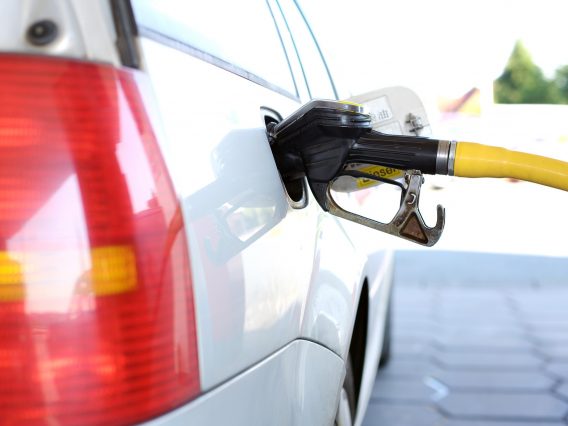
Petrol and diesel prices hit record highs in July 2022. They had fallen back substantially, but have spiked since the start of the Middle East conflict.
On 26 October 2026 there will be a Westminster Hall debate on e-petition 750612 relating to placing a requirement on drivers to report collisions with cats.
