The United Kingdom constitution – a mapping exercise
A briefing paper which "maps" (or summarises) the main elements of the United Kingdom's uncodified constitution.

Emerging and disruptive technologies are changing the way the world operates. For defence, they present both challenge and opportunity.
Emerging and disruptive defence technologies (1MB PDF)
Emerging and disruptive technologies, such as cyber, artificial intelligence and quantum computing, are changing the way the world operates. Militarily such technologies present both opportunities and challenges. They allow militaries to become more effective and more resilient, but they are also changing the nature of warfare.
In September 2020 the MOD launched its Integrated Operating Concept, (IOC) a new strategic vision for defence which recognises that the world has entered an “era of persistent competition” and that the character of warfare has changed.
The overriding messages of the IOC, namely multi-domain integration and persistent engagement, subsequently underpin the thinking behind, and the conclusions of, the Integrated Review and the Defence Command Paper, published in March 2021, and their subsequent refresh in 2023.
As part of this new approach, embracing new and emerging technologies is seen as a priority. The MOD intends to invest £6.6 billion to 2025 in defence research and development with specific focus given to emerging technologies in artificial intelligence, AI-enabled autonomous systems, cyber, space, directed energy weapons, hypersonics and quantum computing. Higher risk research and innovation is recognised as essential for modernisation.
The 2021 Integrated Review and the Defence Command Paper acknowledged, however, that embracing new “sunrise” technologies should not come entirely at the expense of more traditional warfighting capabilities. The 2023 refresh endorsed an approach which puts science and technology at the heart of MOD’s force design and capability development.
The 2023 Defence Command Paper also confirmed the intention to invest “significantly more” than the £6.6 billion already identified for advanced defence R&D in the 2021 Integrated Review, although did not provide more detail.
Among other proposals:
Emerging technologies are not just the purview of defence. They are dual-use by nature and present both opportunities and challenges across the whole of society.
While the MOD is considered an “early adopter” of such technologies and a key partner in the funding of innovation, it is widely acknowledged that there is a need for “genuine collaboration” across Government, industry, academia and in collaboration with international allies and partners.
Defence’s approach to these technologies is therefore closely tied to the delivery of broader government ambition.
This is an update to a briefing that was first published in March 2021.
Emerging and disruptive defence technologies (1MB PDF)
A briefing paper which "maps" (or summarises) the main elements of the United Kingdom's uncodified constitution.
This paper provides a timeline of the major events in the Ukraine-Russia conflict since the 2022 Russian invasion.
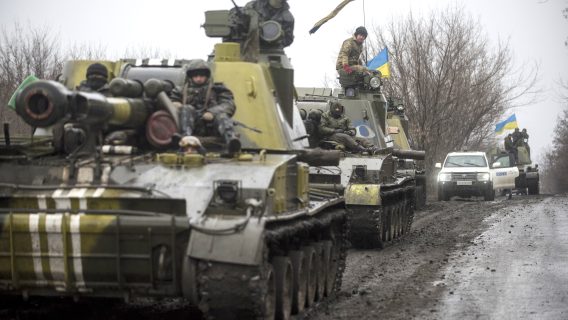
The Northern Ireland Troubles Bill 2024-26 was introduced in the House of Commons on 14 October 2025. It was carried over to the 2026-27 session and is due to be considered by a Committee of the Whole House on 19 and 20 October 2026
