Flood risk management and funding
This briefing paper provides an overview of flood and coastal risk management in the UK, including which bodies manage risk, current policy on flood risk management, and how flood funding works.

A Westminster Hall debate has been scheduled for Tuesday 18 October 2022 from 9.30-11am on delivery of floating offshore wind projects. The debate will be opened by Stephen Crabb MP.
Spikes in global wholesale gas prices, the failure of energy suppliers, Ofgem’s price cap rise and the Russian invasion of Ukraine, have led to growing concern over security, affordability, and sustainability of energy supplies. In response to these concerns, the Government published its British Energy Security Strategy in April 2022, proposing to accelerate the UK towards a low-carbon, energy independent future.
On offshore wind capacity, the Energy Security Strategy announced updated targets for offshore wind, increasing them to 50 GW (previously 40GW in the Net Zero Strategy), and up to 5 GW floating offshore wind (previously 1GW) by 2030. To help achieve this, the Government announced plans to speed up the consenting process for offshore wind developments, which include:
Contracts for Difference (CfD) is a scheme used to support low carbon power infrastructure. Introduced in 2010, CfDs work by fixing the prices received by low carbon generation over a number of years, reducing the risks developers face from a fluctuating wholesale power price, and ensuring that eligible technology receives a price for generated power that supports investment. For more information about CfDs, including how they are decided, see pages 2 and 3 of our briefing Support for low carbon power (April 2020).
In a PQ answer (PQ 36819) on 22 July 2022, the Department for Business, Energy and Industrial Strategy said that:
The Contracts for Difference (CfD) scheme is the Government’s main mechanism for supporting large scale renewable projects. The latest round of the Contracts for Difference, AR4 (Allocation Round 4), delivered almost 11GW of new renewable capacity, almost double the last round in 2019. Technologies like tidal and floating offshore wind were included for the first time ever and more new contracts have been awarded than in any previous rounds. In February, the Government announced the CfD auctions will be held annually, rather than every two years. This will help to further increase renewable energy deployment.
A Future Offshore Wind Scenarios Project, Finding space for offshore wind, was led by the Department for Business, Energy & Industrial Strategy (BEIS), the Crown Estate and Crown Estate Scotland, along with a number of consultancy firms. It assessed the different areas that could potentially accommodate future offshore wind projects up to 2050, and the different forms that development could take, for example using a fixed or floating wind farm design. The study looked at different factors, such as cost, the environment and technology, as well as the impact these have on deployment. The project started in February 2021 and a report was published in May 2022, Future Offshore Wind Scenarios (FOWS) to 2050. The study outcomes do not present a plan or recommendation for the future spatial development of offshore wind, but includes 190 different final models based on different assumptions and permutations that can be accessed through an interactive dashboard at www.futureoffshorewindscenarios.co.uk
New projects point way to clean energy future, says MP Crabb
Floating offshore wind pipeline doubles in 12 months
Floating wind farm in England launches Celtic Sea supply chain
This briefing paper provides an overview of flood and coastal risk management in the UK, including which bodies manage risk, current policy on flood risk management, and how flood funding works.
This briefing outlines the various financial support available across the UK for installing energy efficient measures, heating and renewable energy in homes.

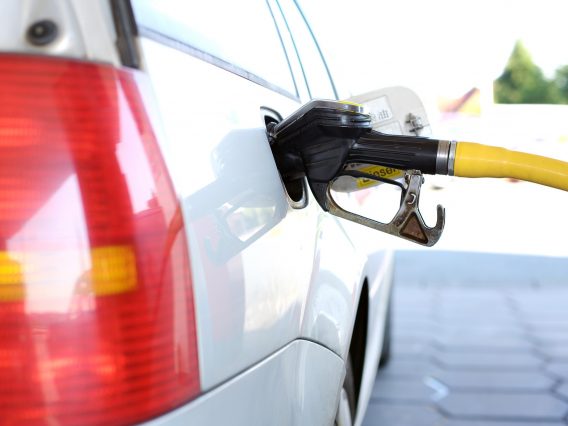
Petrol and diesel prices hit record highs in July 2022. They had fallen back substantially, but have spiked since the start of the Middle East conflict.