Overview: Where are all the world's nuclear weapons?
Who are the nuclear weapon states?

View research relating to nuclear weapons, arms control and the UK’s nuclear deterrent and modernisation programme.
There are nine countries in the world that possess nuclear weapons:
Between them, they possess over 12,000 nuclear weapons (both operational and non-operational).
The NPT represents the only binding commitment to nuclear disarmament in a multilateral treaty agreed by the recognised nuclear weapon states. However, the treaty does not specifically prohibit updating existing weapons systems and it gives no timeframe for nuclear disarmament. None of the nuclear weapon states are signatories to the Treaty on the Prohibition of Nuclear Weapons.
A review conference of the NPT is due to begin at the end of April 2026. Ahead of that conference, there are concerns that nuclear disarmament and arms control is beginning to unravel. All the nuclear weapons states are modernising, and in some cases expanding, their nuclear capabilities. The last bilateral nuclear arms control treaty between the United States and Russia expired in February 2026 and there is no successor treaty in place. It is the first time since 1972 that the nuclear weapon stockpiles of the two largest nuclear states have not been subject to limitations.
Who are the nuclear weapon states?
The debate over nuclear weapons in Europe is gaining traction following France's proposals for greater nuclear cooperation among European allies.

This paper briefly examines the UK's nuclear weapons policies, capabilities and programmes. It is one paper in a larger series on the nuclear weapon states.

In March 2026, President Macron announced significant changes to France's nuclear posture.

In late 2024, President Putin approved a new Russian nuclear doctrine. This paper briefly examines Russia's nuclear weapons policies, capabilities and programmes.
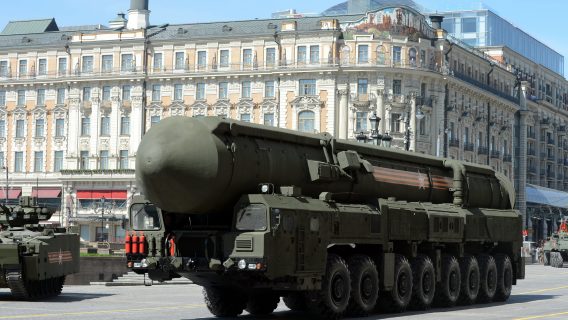
This paper briefly examines the nuclear weapons policies, capabilities and programmes of India and Pakistan.

This paper briefly examines China's nuclear weapons policies, capabilities and programmes.

This paper briefly examines the nuclear weapons policies, capabilities and programmes of the United States.

This paper briefly examines Israel's nuclear weapons policies, capabilities and programmes.

North Korea continues to expand its nuclear capabilities and programmes.

The five-yearly Review Conference of the Treaty on the Non-Proliferation of Nuclear Weapons (NPT) begins on 27 April 2026.
In November 2024 President Putin announced changes to Russia's nuclear doctrine. The move is another step in Russia's ongoing nuclear rhetoric associated with the conflict in Ukraine.
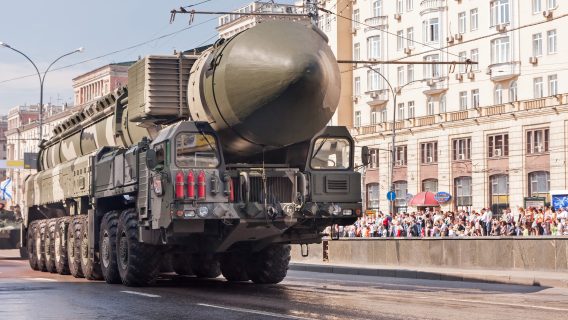
The Treaty on the Prohibition of Nuclear Weapons entered into force in January 2021. The nuclear weapon states have not signed and ratified the new treaty which raises the question of what it can realistically achieve.

The main provisions of the Treaty on the Prohibition of Nuclear Weapons and what it means for the UK.
Bilateral agreements aimed at restricting the nuclear arsenals of the United States and the Soviet Union/Russia have been in place since the early 1970s. For the first time in nearly 50 years that nuclear arms control architecture is now potentially heading towards a crisis.

In August 2019 the United States formally withdrew from the Intermediate-Range Nuclear Forces (INF) Treaty.

To reduce the dangers posed by existing nuclear arsenals and prevent the further proliferation of nuclear weapons technology, a complex international nuclear arms control architecture has evolved.

The nuclear Non-Proliferation Treaty Review Conference will be held in New York from 27 April to 22 May 2015. This note looks at progress made since the 2010 Conference and outlines the UK Government's position.

Describes issues in US-Iran talks in 2026, including the Strait of Hormuz, Iran's nuclear and ballistic missile programme and US sanctions.
All UN sanctions against Iran lifted under the 2015 nuclear agreement will be reimposed on 28 September unless a new agreement can be reached.

On 13 June 2025, Israel launched a series of attacks against Iran’s nuclear programme.
The US has entered into talks with Iran to limit its nuclear programme. How far advanced is the programme, and what issues are being discussed?
The nuclear negotiations with Iran took a big step forward with the announcement of a framework for a full agreement, to be signed by the end of June 2015. Will they make it across the finishing line?

What are the implications of the new Strategic Defence Review for the UK's nuclear deterrent?
As part of a programme to renew the UK's nuclear deterrent, four new Dreadnought class ballistic missile submarines will enter service in the 2030s.

In February 2020, the Government confirmed the existence of a programme to replace the UK's nuclear warhead. What stage is the programme at and how much is it expected to cost?
Since the acquisition of the UK's first strategic nuclear deterrent in the 1950s, the cost of procuring and maintaining it, and which Government department should finance it, has always been debated.

Parts of the UK-US Mutual Defence Agreement, which underpins nuclear cooperation between the two countries, were due to expire in December 2024.
One of the dominant headlines of the Government's Integrated Review: Global Britain in a Competitive Age, was the decision to raise the cap on the UK's nuclear stockpile, for the first time since the end of the Cold War.

A UK-France summit was held on 10 March 2023. It was the first such summit in five years and future foreign policy and defence cooperation featured heavily.
In July 2016 the government sought parliament's approval for the replacement of the UK's nuclear deterrent.

Nuclear convoys transport defence nuclear material, including nuclear warheads and nuclear fuel, around the United Kingdom.
The Future of the British Nuclear Deterrent. House of Commons Library Research Paper 06/53.

This briefing provides background information on nuclear weapons tests, the Government’s recognition of nuclear test veterans and current and previous legal action in this area.
