Ukraine peace talks (November 2025 to March 2026)
What did peace talks between November 2025 and March 2026 achieve?

View research relating to the conflict in Ukraine, including military assistance, sanctions, international legal issues and efforts to resolve the conflict.
On 24 February 2022, Russia launched what it called a “special military operation” in Ukraine. Russian forces crossed into the country from Belarus in the north, Russia in the east and Crimea in the south. Seemingly in response to the “aggressive” actions of NATO, Russia has said that its aim is to “de-militarise and de-nazify” Ukraine. Prior to the Russian invasion, there had already been eight years of conflict in eastern Ukraine between Ukrainian Government forces and Russian-backed separatists.
Over a period of nearly four years, Russian forces have been conducting a full-scale assault on the country, including targeting population centres and critical civilian infrastructure. In October 2022 Russia moved to annex Donetsk, Luhansk, Kherson and Zaporizhzhia Oblasts, even though those regions are not totally under Russian control. Belarus, North Korea and Iran have been providing Russia with direct military support.
Ukraine’s allies and partners have condemned Russia’s actions in Ukraine and have been providing military and financial support. Investigations into possible war crimes committed in Ukraine, including investigations by the International Criminal Court, are underway. An “unprecedented” package of Western-led sanctions has also been imposed on Russia.
Since the end of February 2022, the UN Refugee Agency estimates that millions of refugees have fled Ukraine.
Efforts to secure a ceasefire and long-term peace agreement continue.
What did peace talks between November 2025 and March 2026 achieve?
Part of proposals for securing any future peace deal in Ukraine is the deployment of a European-led multinational force, or Coalition of the Willing.

How has military assistance to Ukraine changed since January 2025 when US President Donald Trump took office?

This paper provides a timeline of the major events in the Ukraine-Russia conflict since the 2022 Russian invasion.
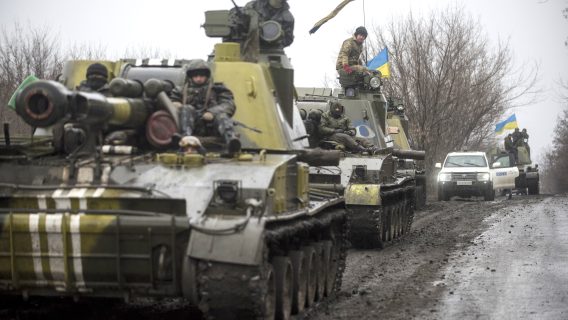
This paper provides a timeline of the major events in the Ukraine-Russia conflict between Russia's annexation of Crimea in 2014 and the eve of the invasion of Ukraine in February 2022.

Commons Library papers, Committee reports, parliamentary material and UK Government press releases since Crimea was seized by pro-Russian forces in 2014.

How has military assistance to Ukraine changed since January 2025 when US President Donald Trump took office?
What military assistance is the UK providing to Ukraine?
The Financial Assistance to Ukraine Bill will allow the government to contribute to the G7 loan agreement to Ukraine that was agreed in June 2024.
An overview of the military assistance provided to Ukraine between February 2022 and January 2025
President Zelenskyy has asked the UK for fighter planes in Ukraine. What combat aircraft does the UK have? And what issues exist for training pilots?
The UK and NATO have ruled out establishing a no-fly zone in Ukraine. What is their legal basis and when have they been used before?

What military assistance did the UK, the US, NATO and the EU give to Ukraine between 2014 and 2021?
Planning for the post conflict reconstruction of Ukraine has begun. The use of sanctioned Russian assets to help fund reconstruction is among the issues being discussed.
Describes the effects of the conflict in Ukraine and the number of refugees leaving the country, alongside what aid the UK and others have pledged from 2022.

How does conflict affect the mental health of refugees, and how has the UK Government responded to the humanitarian crisis in Ukraine?

Russia's actions in Ukraine threaten a humanitarian crisis. The Government advises those in the UK seeking to help to make cash donations to registered charities.

Countries that are considered to be supporting Russia's invasion of Ukraine have increasingly faced sanctions.
How have sanctions against Russia changed since January 2025? Is US policy diverging from that of its allies?
In response to Russia's invasion of Ukraine in February 2022, the G7, EU and other allies and partners across the globe have imposed an unprecedented package of coordinated sanctions against Russia.
As states sanction Russia after its invasion of Ukraine, this briefing sets out the arguments around seizing another state's assets, and explains the intensifying debate on how international law affects sanctions.
The UK sanctions framework is a significant set of powers to sanction individuals, businesses, and states. This paper explains the current operation of sanctions in the UK.
The UK applies sanctions against Russia. How do they apply in the Overseas Territories?

The UK has banned the export of all dual-use items to Russia in response to conflict in Ukraine.
Current sanctions in response to Russia's invasion of Ukraine have reached an unprecedent scale. However, there has been a sanctions regime in place against Russia since 2014.
What did peace talks between November 2025 and March 2026 achieve?
The Visegrad countries (Hungary, Slovakia, Poland and Czech Republic) have increasingly diverged in their positions on the EU and support for Ukraine

Part of proposals for securing any future peace deal in Ukraine is the deployment of a European-led multinational force, or Coalition of the Willing.
A renewed diplomatic effort to agree peace in Ukraine is underway.
What are the latest developments in talks over a potential peace settlement in Ukraine?
US policy toward Russia and Ukraine appears to be shifting as it seeks a negotiated settlement in the conflict.
Does parliament have a say in deploying UK military forces?
A Summit on Peace in Ukraine was held in Switzerland on 15 and 16 June 2024.
In 2023 China presented proposals for reaching a peace settlement in Ukraine.

The UK was the first country to sign a long term bilateral security agreement with Ukraine in January 2024. What security guarantees had NATO and the G7 countries previously made?
NATO has been increasing its military presence along its eastern borders since 2014 and in response to Russian action.
Five European countries plan to withdraw from the international convention banning the use of anti-personnel mines. Lithuania has also withdrawn from the convention banning the use of cluster munitions.
In November 2024 President Putin announced changes to Russia's nuclear doctrine. The move is another step in Russia's ongoing nuclear rhetoric associated with the conflict in Ukraine.
NATO says Ukraine "will become a member" of the Alliance, but has not set a timeframe.
This briefing explains Finland and Sweden's decision to join NATO and the process involved in them joining the alliance.
Western military chiefs have expressed concern that Russia could resort to the use of chemical weapons in Ukraine.

In mid-January 2022 the US, NATO, OSCE and Russia held a series of talks on European security in an effort to defuse the Ukraine crisis.
In 2021 Russian military forces were building on the borders of Ukraine. What were Russia's intentions at the time and how did the West respond?
This paper explains what NATO is, its structure and purpose, and how it has evolved since its formation in 1949.

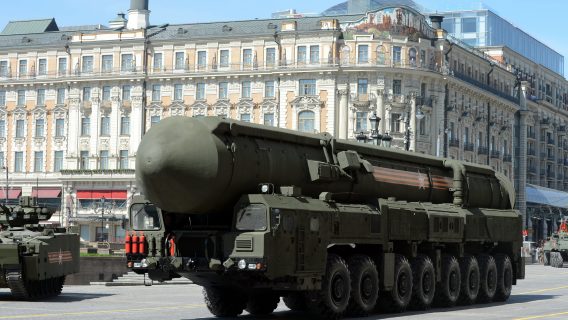
In late 2024, President Putin approved a new Russian nuclear doctrine. This paper briefly examines Russia's nuclear weapons policies, capabilities and programmes.
Two years after Russia's full-scale invasion of Ukraine, states continue to discuss setting up a tribunal dedicated to prosecuting aggression against Ukraine. This briefing outlines how a Special Tribunal on the Crime of Aggression may be set up, and progress to date.
What powers does the UN have to respond to Russia’s invasion of Ukraine?

At the end of September 2022 Moscow announced the annexation of four occupied regions of Ukraine following a series of referendums on joining on Russia, which were widely labelled a "sham" and a violation of international law.
As Russia begins widespread military action against Ukraine, this briefing outlines some of the international legal issues involved.

A debate on the Ukrainian Holodomor and the war in Ukraine is scheduled for Tuesday 7 March 2023 in Westminster Hall, from 4:30-5:30pm. The debate will be led by Pauline Latham MP.
Since Russia’s invasion of Ukraine in February 2022, Ukraine, Moldova and Georgia have become candidates for EU membership, and the EU has stepped up the accession process for Western Balkan countries. This briefing outlines the accession process and state of play
How did the EU initially respond to Russia's invasion of Ukraine? This paper provides an overview of the unprecedented set of actions taken by the EU.

This briefing paper provides an overview of the work of the Council of Europe and also covers the recent expulsion of Russia following its invasion of Ukraine in February 2022.

In January 2025, the UK and Ukraine signed a 100-year partnership agreement. The agreement aims to build military, economic and cultural ties.
A broad overview of the major ongoing operational commitments of the UK’s armed forces in 2025.
Since Russia’s invasion of Ukraine, the UK has applied sanctions and changed rules around visas and corporate transparency to counter Russian influence.

Since early 2022, Ukrainians have been able to take up temporary residence in the UK under Homes for Ukraine and other bespoke visa programmes.

This briefing covers rising prices including food and energy inflation, Government support, and how the cost of living affects households.

How hosting a Ukrainian refugee through the Homes for Ukraine Scheme may affect council tax payments, including single person discounts and second homes.
An explanation of the Act's three main measures on: (1) a beneficial ownership register of Overseas Entities owning UK property; (2) Unexplained Wealth Orders; and (3) Sanctions.

Violence has been increasing in eastern Ukraine, leading to calls for the West to arm the Ukrainian government. But Ukraine is also close to financial meltdown.

The EU announced broad economic sanctions against Russia on 29 July 2014 including restrictions on some Russian banks’ ability to borrow money in EU financial markets, and an arms embargo.

The conflict in Ukraine is in danger of becoming a "frozen conflict" with no clear peace agreement in sight.
Fears of a Russian military intervention in Ukraine are rising as the country faces a political crisis.
In 2014 Russian-backed forces took over the Crimean autonomous assembly, which subsequently declared independence from Ukraine.